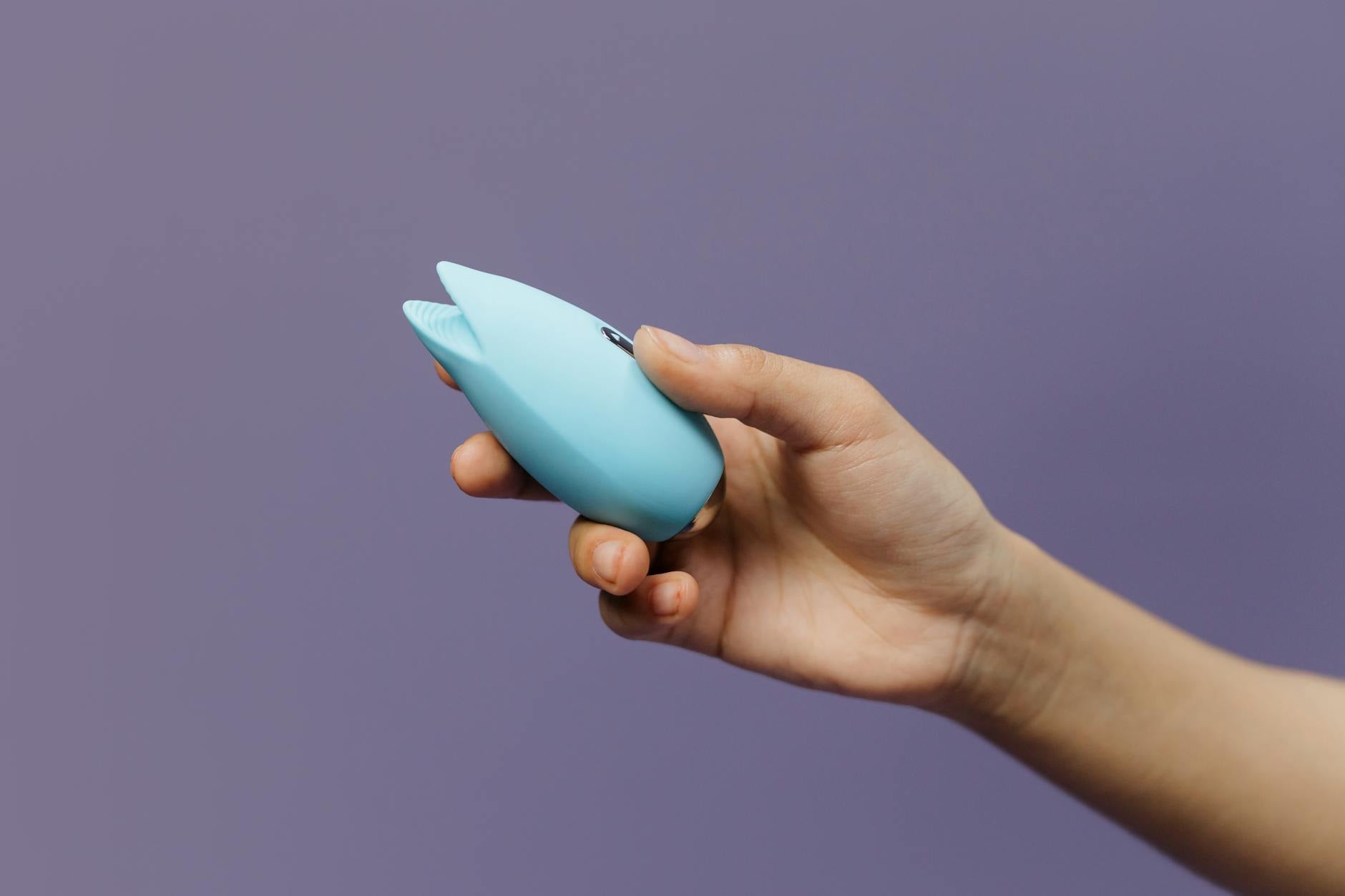
The conversation before anything else
Let's be real: the hardest part about bringing a lemon vibrator into bed with a new partner isn't the toy. It's saying the words out loud. Most people freeze up, assume it means something's wrong, or worry it'll feel like rejection. None of that is true, but your partner won't know that unless you tell them clearly.
Here's the difference between a conversation that works and one that tanks. Bad approach: ambushing them with a vibrator during sex or leaving one on the nightstand as a hint. They'll feel defensive, blindsided, or worried they're not enough. Good approach: choose a moment outside the bedroom. Not in the dark. Not mid-foreplay. Maybe over coffee, or on a walk, or whenever you two usually talk about real things.
The script I recommend goes something like this: "I've been thinking about trying a clitoral vibrator. I'm interested because it gives me a different kind of sensation, and I'd like to explore that with you. This isn't about you or us. It's about me getting to know my own body better. I'd love your thoughts on it."
Notice what that does. It centers your pleasure (which is valid), not a complaint about them. It frames it as exploration, not a fix. And it invites their input instead of telling them what's happening.
Why your partner might be nervous (and how to address it)
Common fears in that conversation: "Does she want me less?" "Will she prefer it to me?" "Is this a sign the relationship isn't working?" These deserve answers, not dismissal.
You can't logic someone out of an emotion, but you can give them information and reassurance. Air-suction clitoral vibrators like the Lem work differently than fingers or a penis. They stimulate nerves in a way that feels new, but it doesn't replace other sensations. Think of it like this: watching a concert live doesn't make you stop listening to music in your car. Different experiences, same pleasure.
Tell them what you want them to be involved in. That matters enormously. Some partners worry the vibrator means they're excluded. If you frame it as something you want to experience together, together, suddenly they're part of the story. "I want to see what this feels like when you're inside me" or "I want to use this while you're touching me elsewhere" makes it collaborative.
If they're still hesitant, ask what's behind it. Is it insecurity? Is it practical concern? Is it just unfamiliar? Those need different responses.
Positions that actually work when you're new to this
Here's what I see couples get wrong: they try to use a lemon vibrator in positions designed for penetration, then wonder why it feels awkward or ineffective. The geometry changes when you introduce a toy.
Woman on top, facing him. This is the easiest entry point. You have total control of the vibrator's angle and pressure. He can see what you're doing, which kills a lot of the awkwardness. He can touch you, kiss you, stay involved. You can use the vibrator on your clitoris while you're moving, or pause and focus on sensation. Start here. It requires the least adjustment for everyone.
Side-by-side. Less common, but it works beautifully for relaxation and intimacy. You're not performing. He can hold you, kiss your neck, pay attention to your responses. You can use the vibrator with one hand while he touches you with the other. It feels less "goal-oriented" and more like exploration.
Him inside, you controlling the vibrator. Once you're more comfortable, this becomes possible. The key: go slow, communicate about depth and movement, and let him know what pressure feels good to you. Many partners find this intensely arousing because they can feel the vibration against them (depending on positioning) and they're watching your pleasure in real time.
Avoid: positions where you can't reach or see each other. Doggy-style, for instance, is harder because you can't use the vibrator on your clitoris in the way that works, and he can't see your face or know how you're responding. Save those for when you're more practiced.
The actual mechanics of using it together
Lubrication is non-negotiable. If you don't already use lube with this partner, introducing a vibrator is the moment to start. It's not a sign of anything wrong. It's the difference between comfortable and uncomfortable, and you deserve comfortable. Water-based lubes work with silicone toys and won't degrade them.
Start with the lowest pattern or vibration setting. Seriously. I know every toy feels tempting at full speed, but your body will respond better to starting soft and building. Plus, lower intensity lets your partner see and feel the effect without overwhelming sensation, which makes them feel more connected.
Keep your hands free for each other as much as possible. The toy does its job. Your hands do different things. Touch his face. Hold his hand. Guide his fingers. This is how you make it feel like sex, not a performance.
Talk during it, but not to narrate. "That feels good" or "I want you closer" or "give me a second" are all helpful. Endless commentary can disconnect you from sensation. Light guidance is sexy. Running commentary isn't.
If orgasm is the goal, remember that orgasm with a partner often takes longer than alone, especially when you're new to something. That's not a failure. That's normal. Some people never orgasm with a partner, and that's okay too. If you're using the vibrator partly to help reach orgasm, be honest about that: "This helps me get there, and I like knowing I can trust my body with you."
Troubleshooting the most common issues
He feels like he's not doing anything. He is. He's creating safety, connection, and arousal. Remind him that you're doing this together. Ask him to touch parts of your body the vibrator doesn't. Ask him to watch you. Ask him to tell you what he sees. Those are active roles.
It doesn't feel as good as when you're alone. Totally normal. Your body responds differently with a partner present. Less privacy (psychologically), different angle, different sensations around you. Give it time. Three to five times usually, not just once.
The mood dies. Laugh about it and move on. The first time you introduce a toy, it's normal for someone to feel self-conscious or lose focus. It doesn't mean anything. Try again. Literally try again the next day if you want.
You can't orgasm now that there's a vibrator involved. Sometimes introducing something new activates performance anxiety. If this happens, don't push. Go back to what works. Use the vibrator alone a few times to make sure you're comfortable with it, then reintroduce it with him when you're more relaxed.
He goes soft, or loses interest. Could mean nerves. Could mean he's distracted. Could mean the intensity of watching you gets him too close to his own edge. Talk about it outside the moment. Some guys find it intensely arousing and need to pace themselves differently. Others take longer to warm up with something new in the equation. Neither is a problem. It's just data.
Making it a regular part of your sex life, not a one-off experiment
After the first few times, you can relax into it. The toy stops being This Big New Thing and becomes just another tool you both have access to. That's when it gets better, not worse.
Store it somewhere you can both reach it. Bathroom drawer is fine. Under the bed. Anywhere it's accessible without awkwardness. The easier it is to grab, the more naturally it'll become part of your routine.
You don't have to use it every time. Sometimes you'll want to, sometimes you won't. That's the whole point. You get to choose based on what your body needs that day.
Consider exploring together what else exists beyond a basic clitoral vibrator. Some partners find that trying different positions with the toy, or using it in new ways, keeps it fresh. Other couples find a rhythm that works and stick with it forever. Both are fine.
One last thing: if you have clitoral numbness or desensitization, introducing a vibrator with your partner might take a little longer or need some adjustment. That's worth discussing with them upfront. Same if you're navigating pleasure after pelvic floor surgery. The toy is the same, but your body's needs matter, and a good partner will listen.
FAQ: What people actually ask about using vibrators with a partner
Does using a vibrator with a partner make orgasms less intense?
Nope. Some people find shared orgasms more intense because of the emotional connection and eye contact. Others find solo vibrator use more intense because there's no performance pressure. Both are normal. Intensity isn't the only measure of a good orgasm, anyway. Sometimes a gentle, connected orgasm beats a fireworks show.
How do I know if my partner is genuinely okay with it, or just saying yes?
Good question. Watch for genuine curiosity vs. passive compliance. Genuine: "Can I try holding it?" "What does that pattern feel like?" "Let's look at other options together." Passive compliance: going silent, not touching you, checking their phone, not initiating. If you see compliance, pause and ask directly outside the bedroom. "I want to make sure you're actually into this. No judgment either way."
Is it weird to use a vibrator on a partner's request, when I didn't ask for it?
Not weird at all. Some partners suggest it because they think it might feel good for you, or because they're curious. If you like the idea, great. If you don't, say so. "I appreciate you thinking about my pleasure, and I'm not interested in trying this right now" is a complete sentence.
Can we use a vibrator if we're having mismatched libido?
Absolutely. In fact, a vibrator can be really helpful when one partner wants sex more frequently than the other. It can help the less-interested partner get aroused faster (reducing initiation anxiety), or it can let the higher-libido partner reach orgasm with support from their partner, creating more connection in less time. See our full guide on mismatched libido and lemon vibrators for strategies.
What if I want to use it and they don't? How do we compromise?
You don't have to use it together every time. You can use it alone, and they're welcome to be in the room or not. Some partners love watching, even if they're not directly involved. Others prefer you use it solo. That's fine. The compromise isn't "never use a vibrator." It's "let's find a way both of us feel comfortable." If they're completely resistant, go back to the root concern. Usually it's one of the fears we talked about earlier, and those can be addressed with more information and reassurance.
Does using a lemon vibrator mean we need to use other toys too?
Nope. A clitoral vibrator is complete on its own. You don't need to add anything else unless you both want to explore more. Some couples are happy with one good toy forever. Others like variety. Neither is required or more advanced than the other.
The real thing that makes it work
Introducing a vibrator with a new partner is less about the toy and more about communication. If you can talk about this openly, laugh when things feel awkward, and keep each other's feelings in view, you've already done the hard part. The vibrator is just the easy part that follows.
Your pleasure matters. Your partner's comfort matters. Both can be true at the same time. And if you need help with the conversation, that's what we're here for. Get in touch anytime.