Let's be real about mismatched desire
One of you wants sex three times a week. The other wants it once a month, maybe. You're not broken. Neither are they. This is one of the most common relationship friction points, and it rarely gets the honest conversation it deserves because most people assume it means something is wrong with the partnership itself.
It doesn't. What it means is that you have different baseline desires, and you need a plan that doesn't ask one person to suppress themselves or the other to perform on cue.
Why desire mismatch happens (and it's not usually about attraction)
People get stuck believing libido differences signal deeper incompatibility. That's often wrong. Desire gaps come from different places entirely. Stress levels, medication side effects, past sexual experiences, attachment styles, work exhaustion, hormonal fluctuations, relationship trauma, depression, anxiety. One partner might have experienced pressure to perform earlier in life and unconsciously pulled back. The other might have been raised to believe their needs were shameful and are only now learning to access them.
The gap isn't usually about how attractive your partner finds you. It's about how much they have available to give in that moment, on that day, in that season of their life.
But here's the part nobody talks about clearly: you can't fix a mismatch by talking about it alone. Conversation helps, but it doesn't change the fact that you still want sex more than your partner does. Acknowledging that is step one. Figuring out how to meet those needs without resentment is step two.
Why solo pleasure with a lemon vibrator changes the equation
When desire is mismatched, self-pleasure becomes the most generous thing you can do in a relationship. Not instead of partnered sex. Alongside it.
Here's why: if you're waiting for your partner to want sex as much as you do, you're going to build resentment. Small resentment first (they rejected me again, they don't care about my needs), then bigger resentment (they're selfish, we're incompatible, I'm stuck with someone who doesn't desire me). That story poisons everything, even the sex you do have together.
When you use a lemon vibrator regularly for your own pleasure, something shifts. You're no longer outsourcing your satisfaction to your partner. Your desire doesn't depend on them. That takes the pressure off both of you. Your partner isn't responsible for your orgasms or your sexual fulfillment. You are. And paradoxically, that often makes partnered sex better because it's not burdened with unmet expectations.
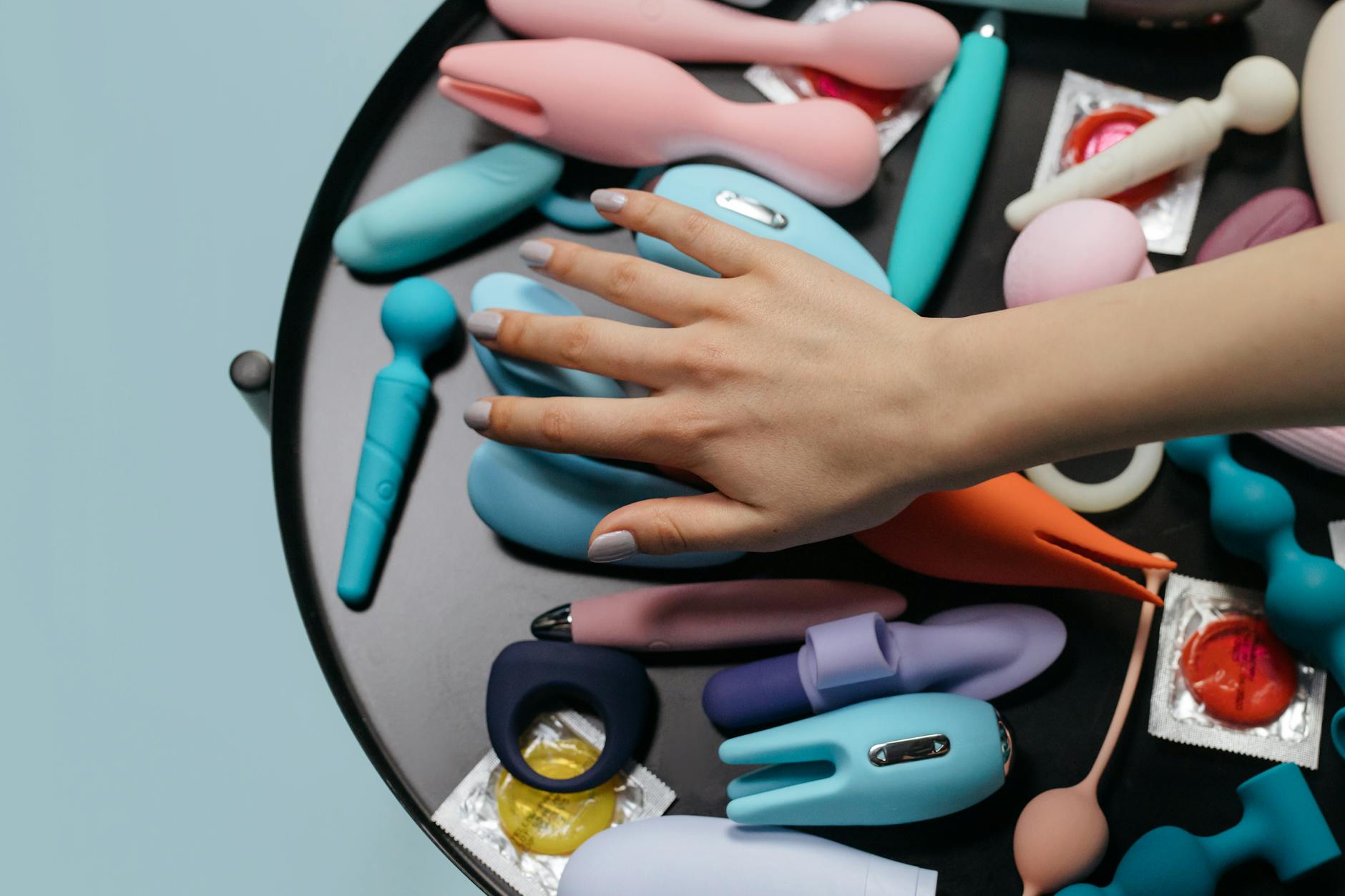
Photo by cottonbro studio on Pexels
Creating the conversation without blame
Most couples skip the actual conversation because it feels like criticism. "You never want sex" lands like "you're broken." But there's a way to talk about this that doesn't trigger defensiveness.
Start with your own need, not their failure. "I have a stronger sex drive than you do, and that's not going to change. I need to figure out how to take care of that so I'm not waiting around or building resentment." Not accusatory. Just true.
Then separate the two conversations completely. One conversation is about your solo pleasure. That's yours to own. The other conversation is about maintaining connection and intimacy as a couple, which might look very different from frequent penetrative sex. Maybe it's a weekly date where you're physical without sex being the goal. Maybe it's more foreplay and less full sex. Maybe it's being in the room together while you use a clitoral vibrator and they read beside you, present but not performing.
The key is this: they're not responsible for your solo pleasure, and you're not responsible for creating theirs more often than they want it. Those are two separate needs.
Practical ways to use a lemon vibrator in your routine
First, decide on privacy that actually works. Some couples are comfortable with you using a vibrator while they're in the house. Others aren't. Don't assume. Ask. "I'd like to use my lemon vibrator a few times a week for myself. What feels okay to you?" This isn't asking permission. It's checking in about logistics.
Build it into your life like you'd build in exercise or a shower. Not something you squeeze in furtively, but something intentional. Some people do it in the morning before their partner wakes up. Others carve out 20 minutes on a Tuesday evening. The routine matters because it stops you from white-knuckling your desire or treating it as shameful.
Use the air-suction technology of a lemon vibrator to your advantage. The Lem's suction patterns mean you can go from low intensity to high without the same kind of friction that can make you sore if you're using it multiple times a week. Start with pattern one or two and work up. The ride isn't a race.
Most people finish in 10 to 20 minutes once they know their body well. But take the time you need. This is for you. There's no performance metric.
When to bring pleasure back into partnered sex
Here's where it gets interesting for couples working through desire mismatch. Once you've separated your pleasure from your partner's responsibility, you can actually introduce your vibrator into partnered sex without it feeling desperate or substitutional.
When you're together and your partner is interested, there's no shame in saying "I'd like to use my lemon vibrator." Some partners find this incredibly hot. Some find it relieving because it takes pressure off them to bring you to orgasm. Others need time to adjust to the idea. All of that is fine.
The shift is subtle but important: it stops being "I need you to want me more" and becomes "Here's what works for my body, and I'd love you to be part of it." That's a wholly different emotional tenor.
Managing the guilt and shame that usually shows up
Most people with higher sex drives carry a low-level shame about their desire. They've internalized messages that wanting sex "too much" makes them needy, broken, or difficult. They might worry that using a vibrator will make them less attractive to their partner or will "prove" they don't need the relationship.
None of that is true. A lemon vibrator doesn't replace partnership. It supplements a gap that exists regardless of whether you address it or not. Using it is honest. Not using it and building resentment is corrosive.
The guilt also sometimes comes from your partner, who might interpret your self-pleasure as criticism of them. This is where conversation before action matters. Frame it as "I love you and I want us to stay connected. I also need to take care of my own needs so I don't resent you." That's not a threat. It's the opposite.
What happens when you stop waiting
In my practice, I've watched couples with significant libido gaps find real stability once the higher-desire partner stopped waiting. The resentment lifted. The pressure lifted. Partnered sex became something they both wanted instead of something one person wanted and the other felt obligated to provide.
The lower-desire partner often becomes more interested once the stakes aren't so high. Not always. But frequently, when they're not defending against constant pressure, they're more willing to be intimate. And the higher-desire partner, with their needs met through solo pleasure, can show up to that intimacy without desperation.
It's not a magic fix. But it is a realistic way forward that doesn't ask anyone to pretend to feel something they don't.
A note on therapy if the gap is growing
If the desire mismatch is new, or if it's connected to other relationship tension, talking with a couples therapist can help you understand what's underneath it. Sometimes a lower sex drive signals depression or medication side effects. Sometimes it signals relationship distance that needs addressing. Sometimes it's just how two people are wired.
A therapist can help you figure out which. And if it's the latter, you'll at least know you're working with biology, not failure.
Using a lemon vibrator for solo pleasure isn't settling. It's being an adult about the fact that no two people want sex at exactly the same frequency, and that's okay. Your pleasure matters. So does your relationship. You can take care of both.
People also ask
Is it normal to have a much higher sex drive than your partner?
Completely normal. Desire differences are one of the most common issues couples face, and they don't indicate incompatibility. Libido is influenced by stress, hormones, medication, past experiences, attachment style, and individual wiring. Two people in the same relationship will almost always have different baseline desires.
Will using a vibrator make my partner feel inadequate?
Not necessarily, but communication prevents assumptions. Some partners feel relieved that you're meeting your own needs without pressure on them. Others need time to adjust. The key is explaining that a clitoral vibrator like the Lem isn't a replacement for them. It's a tool for self-care that actually protects your partnership by preventing resentment.
How often should I use a lemon vibrator if I have a high sex drive?
As often as you need to feel satisfied and not resentful. For some people that's two or three times a week. For others it's daily. There's no "normal." Listen to your body and your emotional state. If you're using it to avoid addressing relationship issues, that's different from using it as a healthy outlet for desire mismatch.
Can using a vibrator solo actually improve partnered sex?
Often yes. When you're not waiting for your partner to meet all your sexual needs, you bring less pressure and expectation to partnered sex. You can also show your partner what you like by using your vibrator in front of them, which removes guesswork and makes intimacy feel more collaborative rather than like a performance.
What if my partner is uncomfortable with me using a vibrator?
Start with curiosity. Ask what specifically makes them uncomfortable. Is it about feeling replaced? About privacy concerns? About cultural or religious beliefs? Understanding the root helps you address the actual issue instead of getting stuck in defensiveness. Sometimes reassurance helps. Sometimes you need a couples therapist to work through it together.
Should we talk about desire mismatch before or after introducing a vibrator?
Before. Your partner will feel less defensive if you frame it as taking responsibility for your own pleasure rather than criticizing their desire level. Say something like: "I have a higher sex drive than you, and I want to take care of that myself with a lemon vibrator so I'm not putting pressure on you. I wanted to talk to you about it first." That's collaborative, not accusatory.
If you're feeling stuck in a cycle of resentment or disconnection around desire, reaching out for support helps. You can contact Hello Nancy for resources, or explore our guide on using clitoral vibrators to understand what works for your body.