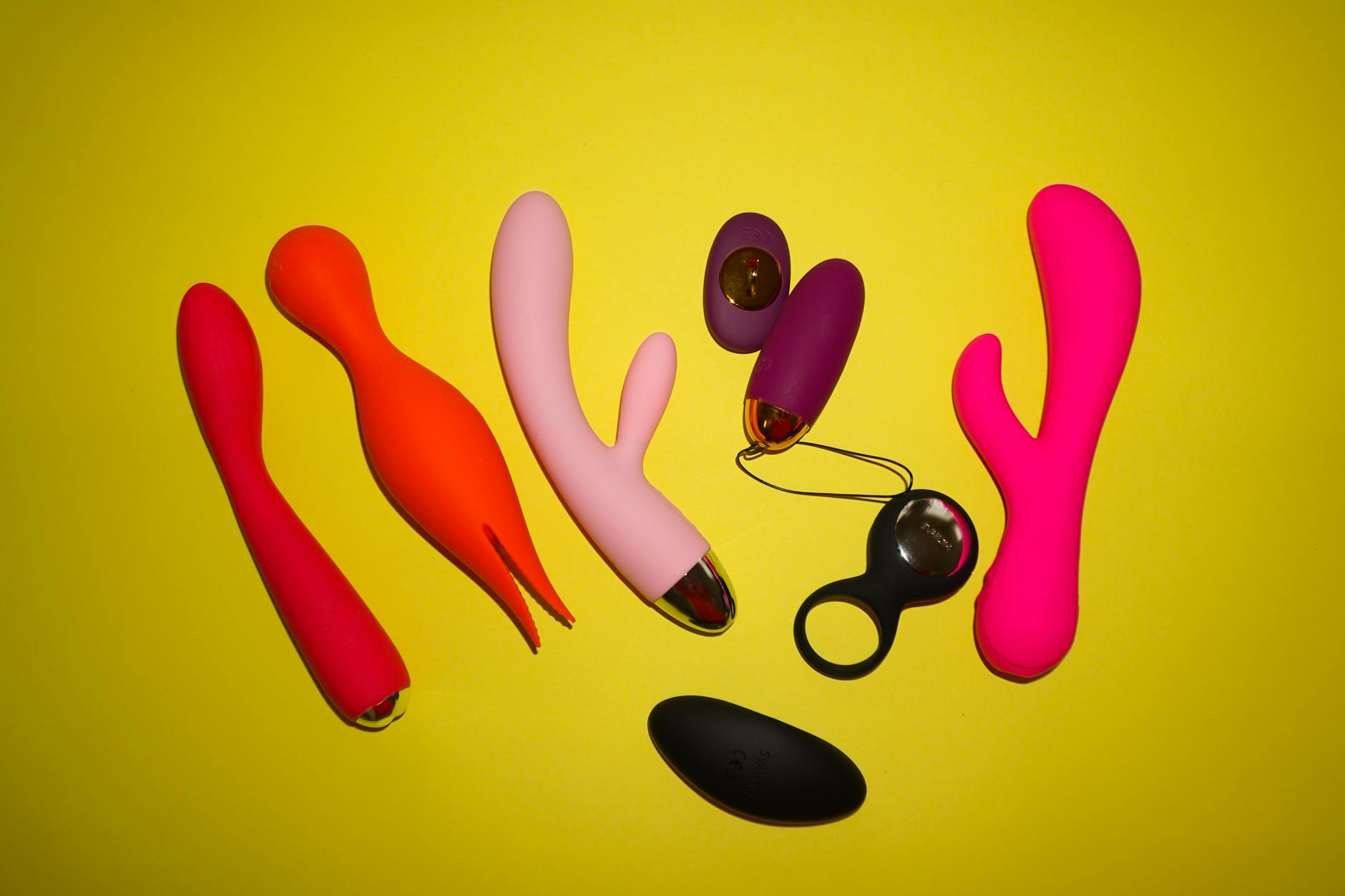
When your pleasure rhythms stop matching
Here's the thing about long-term partnerships: desire rarely stays in sync forever. One of you wants sex more often. One of you takes longer to warm up. One of you is thinking about work, and the other is already there. That's not a failure. It's just the normal math of living with another person.
But when the mismatch feels constant, it starts to create a secondary problem. You stop trying. Or you perform. Or you resent the person you love because their timeline doesn't match yours. That's when things get quiet in ways that are harder to fix than the original problem.
Lemon clitoral vibrators aren't magic wands. But they do something practical that helps: they shift the dynamic from "are we aligned?" to "are we both here right now?" That's a smaller, more solvable question.
Why being out of sync feels like a personal failure (when it isn't)
We're sold this story: good couples want each other at the same time, in the same way, with the same frequency. If that's not you, something's broken. One of you is broken.
This is completely false. Research on long-term relationships shows that synchronized desire is actually rare, even in happy partnerships. What's common is one person having a higher libido, or spontaneous arousal, while the other has responsive desire. That means they need to be touched to become interested, not interested first and then touched.
Add life stress, work, aging, hormonal changes, or just the accumulated weight of being known by someone for ten years, and the gap widens. That's not pathology. It's just reality.
The problem isn't the mismatch. It's what the mismatch creates: performance pressure. When you know your partner is ready but you're not, you might rush yourself. When you're ready but they're not, you might shut down and wait. Both of those moves take you out of your own body and into your head. That's where desire actually dies.
How air suction changes the synchronization problem
This is where Hello Nancy's lemon vibrators become useful in a specific way. Unlike traditional vibration, which requires you to build arousal to a point where it feels good, the air suction technology works with responsive desire. You don't have to be warmed up already. The sensation itself is warming.
That matters because when you're out of sync with a partner, your default is often to monitor whether you're "there yet." Am I interested? Should I be interested by now? The performance anxiety itself is the actual barrier.
With a lemon vibrator's suction, you have something that works independent of your mental state. Your brain can quiet down. Your body just receives the sensation, and responsiveness often follows. This is clinical fact, not optimism. Air suction stimulates the clitoral complex in a way that doesn't require you to perform arousal for your partner's benefit.
The specific moves that help when rhythm feels off
First: Stop framing it as a problem to solve together. I know that sounds counterintuitive. But couples who try to "fix" desire mismatch by syncing up usually end up creating more pressure, not less. Instead, separate the conversations: "I want us to reconnect" is different from "my body responds on a different timeline." Address them differently.
Second: Use a lemon clitoral vibrator as permission to opt out of performance. Tell your partner: "I'm going to use this, and it's not because I don't want you. It's because it helps me get back into my body when I'm in my head." A good partner will understand that as a relief, not a rejection. You're not removing them from the picture. You're inviting them to witness your actual pleasure instead of your performance of pleasure.
Third: Start when you're alone. Before you introduce a lemon vibrator into couple's time, know what it feels like solo. What patterns does it unlock? How quickly does sensation build? How do you breathe? What do you think about? This matters because when you're out of sync with a partner, you're often already anxious. Adding a new tool while anxious is a setup for disappointment. Get comfortable first.
Fourth: Communicate what you're noticing. After solo exploration, share something small. "I realized my body needs about five more minutes than I thought" or "That sensation actually works better when I'm not thinking about whether I'm ready." This shifts the dynamic from "something's wrong" to "here's what I'm learning."
What this looks like in actual partner time
Let's say you're out of sync: your partner is aroused, you're not yet. Before the lemon vibrator, you might push yourself to perform interest. After you've explored solo, here's what changes.
You can say: "I want us to be together, but I need a minute to get into my body first. Can you hold me while I use this?" Or: "I'm enjoying watching you. Can you use this on me while we talk?" Or simply: "I want to try this with you."
The tool gives you options that don't require faking. You're not waiting passively for desire to arrive. You're not performing. You're actively engaged in your own pleasure, and your partner gets to participate in that instead of guessing whether you're actually there.
For partners with higher desire, this also removes the guessing game. They're not monitoring you, wondering if you're into it, second-guessing whether to keep going. The vibrator is doing the work. You can focus on connection.
Why presence matters more than synchronization
The real thing couples need isn't matching desire. It's presence. Being in your body instead of your head. Knowing your own pleasure instead of monitoring your partner's. Trusting that your needs matter even if they're different.
When you're out of sync and using a tool like a lemon sucker or lemon clitoral vibrator, something shifts neurologically. You can't think about anything else while sensation is happening. You're literally pulled back into your body. That's the actual medicine.
Long-term partners who reconnect around pleasure often say the same thing: "It wasn't the tool. It was that we both stopped trying to be somewhere we weren't." The tool just made that permission easier to give yourself.
When to know this is enough (and when it isn't)
If you're out of sync and using a lemon vibrator feels like it reconnects you both, that's wonderful. Keep going.
If you're out of sync and the vibrator feels like a bandaid on a bigger resentment, it probably is. That's when you need a conversation that isn't about sex at all. It's about whether you both want to be in the relationship, whether you feel valued outside the bedroom, whether there's contempt underneath the desire mismatch.
A vibrator is a tool for presence, not a tool for fixing relationships that have lost their foundation. Know the difference.
The rhythm will shift again
Here's what I've seen in twenty years of working with couples: the mismatch that feels permanent today often shifts in six months or a year. Someone starts a new job. Stress releases. A health thing resolves. Suddenly the person who was always holding back has energy again. Or the person who was always reaching gets tired, and equilibrium settles somewhere different.
Your job isn't to force synchronization. It's to stay present to whoever you both are right now. That's what lemon vibrators actually help with. They're not about fixing your partner. They're about you staying in your body long enough to let connection happen.
People also ask
How do I introduce a lemon vibrator if my partner feels threatened by it?
Start with curiosity, not defensiveness. "I read that this tool helps people who have trouble syncing up. Want to learn about it together?" Most partners feel threatened because they think the vibrator is a replacement for them. Show them it's the opposite: it's you staying engaged instead of checking out. You might even explore air suction together to make it collaborative from the start.
What if my partner has a higher sex drive than me?
This is one of the most common mismatches. The partner with lower desire often feels guilty, while the higher-desire partner feels rejected. A lemon clitoral vibrator helps because it removes the guilt equation. You're not saying "I don't want you." You're saying "I want to meet you, and this tool helps me get there." Check out how to use lemon vibrators when your partner has a higher sex drive for specific strategies.
Can lemon vibrators actually help reconnect emotionally, or is it just physical?
Physical and emotional are not separate systems. When you're out of sync, being in your body usually improves emotional connection. You're not in your head worrying. You're present. Your partner can feel that. Over time, repeated moments of presence build safety and trust. That's emotional reconnection.
What if my partner wants penetration and I want clitoral stimulation only?
This is also incredibly common, and it's not a compatibility problem unless you frame it as one. Using a lemon vibrator during penetration, or separately, gives you both what you need without negotiating whose pleasure "counts." Both do.
How do I know if we're out of sync or if something bigger is wrong?
Out of sync usually feels like a timing problem. Something bigger feels like avoidance, resentment, or loss of attraction. If you're both willing to be present and try tools like lemon vibrators, and things improve, you were probably just timing-misaligned. If nothing shifts, you might benefit from talking to a couples therapist about what's underneath the desire gap.
Should I be embarrassed about needing a vibrator to get interested?
No. You should also understand that needing a vibrator isn't about you being broken. It's about your nervous system and your arousal pattern. Roughly 75% of people with vulvas need external clitoral stimulation to orgasm. That's not a defect. That's how bodies work. A lemon vibrator just gives you access to what you already have.
The conversation matters more than the tool
At the end of all this: the lemon vibrator is useful. But the more important thing is the conversation around it. "I feel out of sync with you, and I want to find a way back in" is a vulnerable thing to say. Most partners hear it as a gift, not a criticism. Once you've named the gap, tools like these become easier to introduce.
Your pleasure matters. Your partner's matters too. When they're on different timelines, that's not a failure of your relationship. It's just math. The couples who navigate it well are the ones who stay present instead of checking out. A lemon clitoral vibrator is just one way to practice that presence. It works. But only if you're willing to try.
If you're feeling stuck or you're not sure how to have this conversation, reach out. These waters are navigable. You just need the right map.