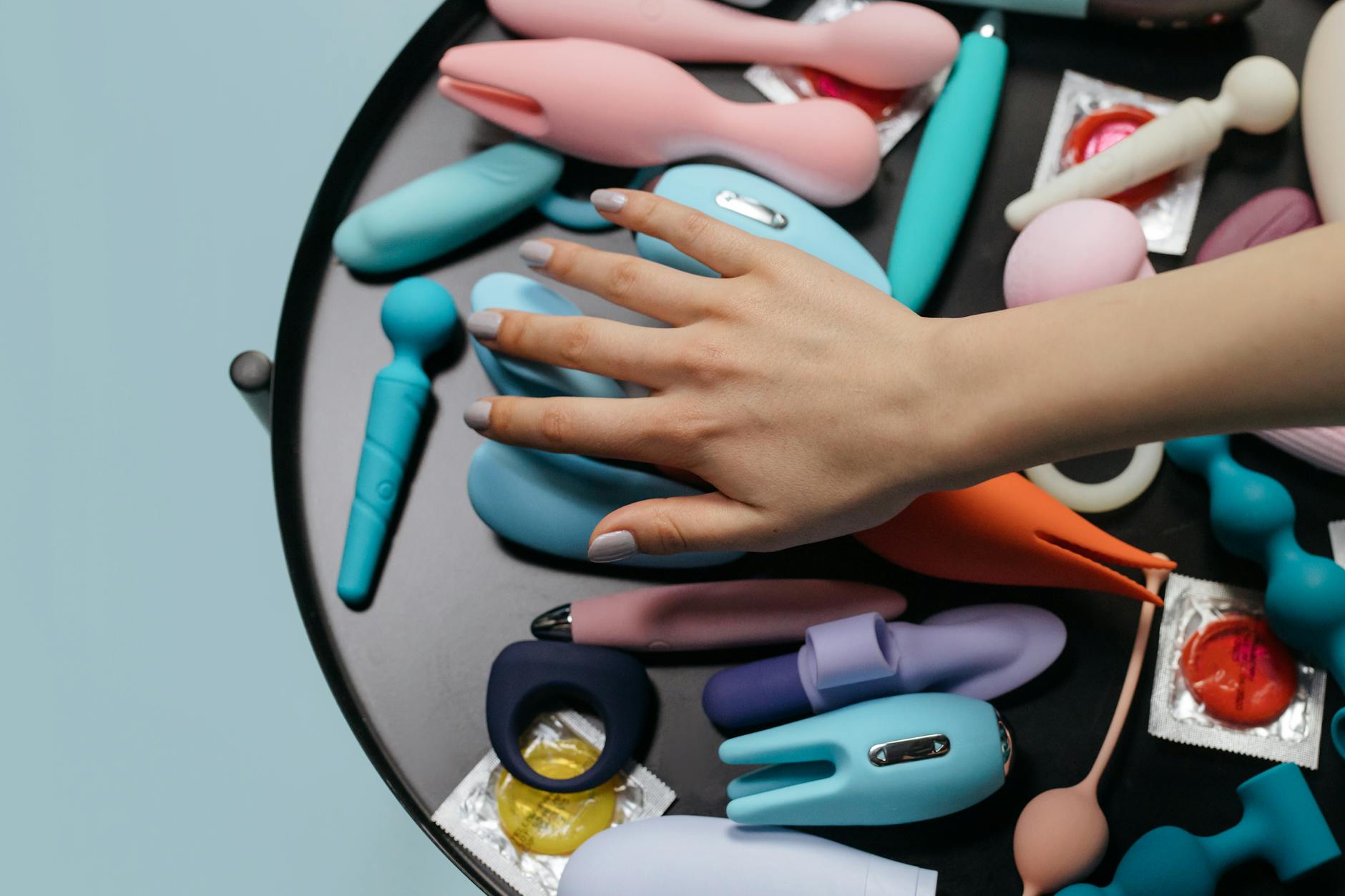
Here's the thing about new relationships and toys
Introducing a lemon vibrator early in a relationship is not a sign of neediness, impatience, or that something's wrong. It's actually the opposite. It's a sign that you know what you like and you're confident enough to say it out loud. That's attractive.
The tricky part isn't the toy itself. It's the conversation beforehand. Get that right, and everything else follows naturally. Get it wrong, and suddenly your partner thinks you're unhappy with them or they're not enough. Neither is true, but the wrong framing makes it sound that way.
Why the timing of the conversation matters
Don't bring up lemon vibrators in the middle of sex. Don't introduce the idea right after mediocre sex. Don't spring it on them as a surprise in the bedroom. These moments carry too much emotional weight and leave zero room for real conversation.
Instead, bring it up casually, clothed, away from the bedroom. Ideally somewhere you're both relaxed. Over dinner, on the couch watching something, in a car. The goal is to make it feel like a normal conversation about preferences, because it is.
Timing also matters in terms of relationship stage. Two weeks in is too early. You're still in the phase where you're calibrating attraction and risk. Eight weeks in, once you've had several good experiences together and some basic trust is built? That's the sweet spot.
The script that actually works
Don't say: "I want to use a vibrator because you're not doing it right."
Do say: "I've realized orgasms with a clitoral vibrator feel really different for me, in a good way. I'd like to explore that with you if you're open to it."
The difference is ownership. One blames them. The other owns your preference.
You can add context if it feels natural: "It's not about replacing anything you do. It's just a different sensation I've noticed I really enjoy." Then stop talking and listen.
Their first response might be defensive, curious, enthusiastic, or nervous. Any of those is fine. Defensive usually means they're worried they're not enough. Nervous might mean they're worried about how it works or whether they'll do it wrong. Curious is great. Enthusiasm is ideal.
Your job is to reassure: "I love what we do together. This is just something I'd like to add to that." Full stop.
What happens if they say no
Some partners will. That's real. The question is whether it's a hard no (I don't want toys in our sex life, period) or a soft no (I'm nervous about this, I need more time to think about it).
A soft no often comes with questions: "Will you need it every time?" "Does this mean I'm not enough?" "What if I do it wrong?" These are answerable. A hard no is a boundary. You get to decide whether you want to stay in a relationship with that boundary, but you don't get to negotiate it.
Most soft nos shift over time, especially if you don't push and you stay patient. People often need to sit with the idea. What felt threatening on day one feels normal on day thirty.
If you're in the very early dating phase and someone says no, that's information. You're allowed to use it to decide whether you want to keep dating them. Your pleasure matters.
The first time you actually use one together
Once they've said yes, you still need a plan. This isn't the time for spontaneity.
First, show them the toy. Let them hold it. Let them turn it on and feel how it works. Demystifying it removes most of the awkwardness. If you're using a lemon clitoral vibrator from Nancy Lemons, show them how the suction works differently from traditional vibrators. Explain that it's quieter, less intense on sensitive tissue, and designed specifically for clitoral pleasure. Make it boring and clinical for a minute. Nervousness dies in the face of information.
Then talk about how you want to use it. Do you want them to use it on you while you're together? Do you want to use it yourself while they touch you another way? Do you want them to guide where it goes? Do you want to try it solo first and then bring them in?
This is not a subtle conversation. Say it out loud. "I'd like you to hold it while I tell you where to move it." "I want to use it myself so I can show you exactly what feels good." "Can we start with you touching me and me using it at the same time?"
Do not assume. Do not hint. Do not hope they figure it out.
Setting up the physical space helps more than you'd think
Comfort matters. Make sure the bed or surface is comfortable. Have water nearby because intensity can make you thirsty. If you want music or low lighting, set that up first. Remove anything that will distract you (phone off, door locked if needed).
Temperature matters too. Your body gets more sensitive when it's warm. If the room is cold, you'll be tense.
You're not being prissy about this. You're being intentional. There's a difference.
What to do if it's awkward anyway
It probably will be, a little. That's normal. The first time you do anything new with someone is slightly awkward. You're both trying to read each other's signals. You're both a bit self-conscious.
Talk through it. "That didn't feel quite right, let me adjust." "Can you go slower?" "That's perfect, keep doing that." Narrate what feels good. Your pleasure is the point here, and your partner can't read your mind.
If it genuinely doesn't work the first time, that's also fine. Stop, laugh, try again another time. The pressure to make it perfect is what kills it. Low expectations and high communication will get you further than high expectations and no words.
After the first time
Talk about it. Not immediately after, when you're both vulnerable and tired. But the next day or later that evening, when you're both clothed and grounded.
"That felt good." "I liked when you did this part." "I was nervous about this other part, but it was fine." "I want to try something different next time."
This is where a new partner shows you whether they're really paying attention. Good partners ask follow-up questions. They want to know what worked, what didn't, what you want to do differently. They're not defensive. They're curious.
If your partner gets quiet or withdrawn after, check in directly. "Are you okay? Did something feel off?" Give them space to share if something didn't feel good to them.
When lemon vibrators fit into the bigger intimacy picture
Here's what I see in my practice: couples who introduce toys early, with clear communication, end up with deeper sexual confidence overall. They've broken the seal on talking about what they want. Everything else becomes easier.
If you want deeper connection with a long-term partner, this foundation of communication matters even more. You're building a pattern now, early on, that makes it safer to ask for things later.
Your new partner also gets to see you as someone who knows yourself and asks for what you need. That's not a turnoff for the right person. It's a green flag.
Common anxieties and what actually happens
"They'll think I'm desperate." No. They'll think you're self-aware. Desperation usually shows up as neediness and inconsistency. Knowing what you like and saying it calmly is the opposite.
"They'll judge me." Possible. In which case, do you want to be with someone who judges you for your pleasure? Probably not. That's actually useful information gathered early.
"Sex will become all about the toy." It won't, unless you make it that way. A lemon clitoral vibrator is an addition to what you already do, not a replacement. Use it sometimes. Don't use it other times. Keep the variety.
"It means I'm not satisfied with them." No. It means you're satisfied with yourself enough to ask for more. That's completely different.
FAQ
How soon into dating is too soon to mention lemon vibrators?
Wait until you've had good sex a few times and you trust each other enough to be vulnerable about other things. Two to three months is usually the sweet spot. Too early and they don't know you well enough to hear it generously. Too late and it feels like you've been hiding something.
What if my new partner has never used a toy before?
That's actually ideal. They don't have previous experience to compare to or baggage about what toys mean. Show them how a lemon clitoral vibrator works, explain that it uses suction instead of traditional vibration, and let them see it in action before you use it. Most people's anxiety dissolves once they understand the mechanics.
Should I use a toy solo first if my partner is nervous?
Yes, if that helps them understand how it works and that it's not a threat. You can use it by yourself and tell them about the experience. "I tried it and it felt amazing. I'd love to experience that with you in the room." That's less pressure than asking them to use it on you immediately.
What if we try it and they want to use it on me constantly?
Set a boundary. "I love this, and I also want variety. Let's use it sometimes, not every time." A partner who respects you will understand that you want sex to feel different on different occasions.
Can I introduce a lemon vibrator if I've had issues with other toys in past relationships?
Yes. But be specific about what happened before and what you want to be different this time. "I tried vibrators with my ex and it never felt right. With you, I want to try again because I trust you more." That's honest and it gives your new partner context.
Is it weird to ask a new partner to use a lemon clitoral vibrator on me?
No weirder than asking them to touch you in a specific way. You're asking for a sensation that feels good. That's not weird. That's communication. The partners who find it weird are usually the ones with their own anxieties about sexuality. That's their thing to work through, not yours.
The bottom line
Introducing a lemon vibrator to a new partner is a conversation, not a surprise. It's a preference, not a problem. It's a chance to practice asking for what you want, which is a skill that serves you in every other part of the relationship.
The right partner will hear it as confidence. They'll be curious about what feels good for you. They'll want to be part of that discovery. If they don't, that's useful information too.
Your pleasure matters. Saying that out loud, early and clearly, is how you build a foundation where everything else gets better.