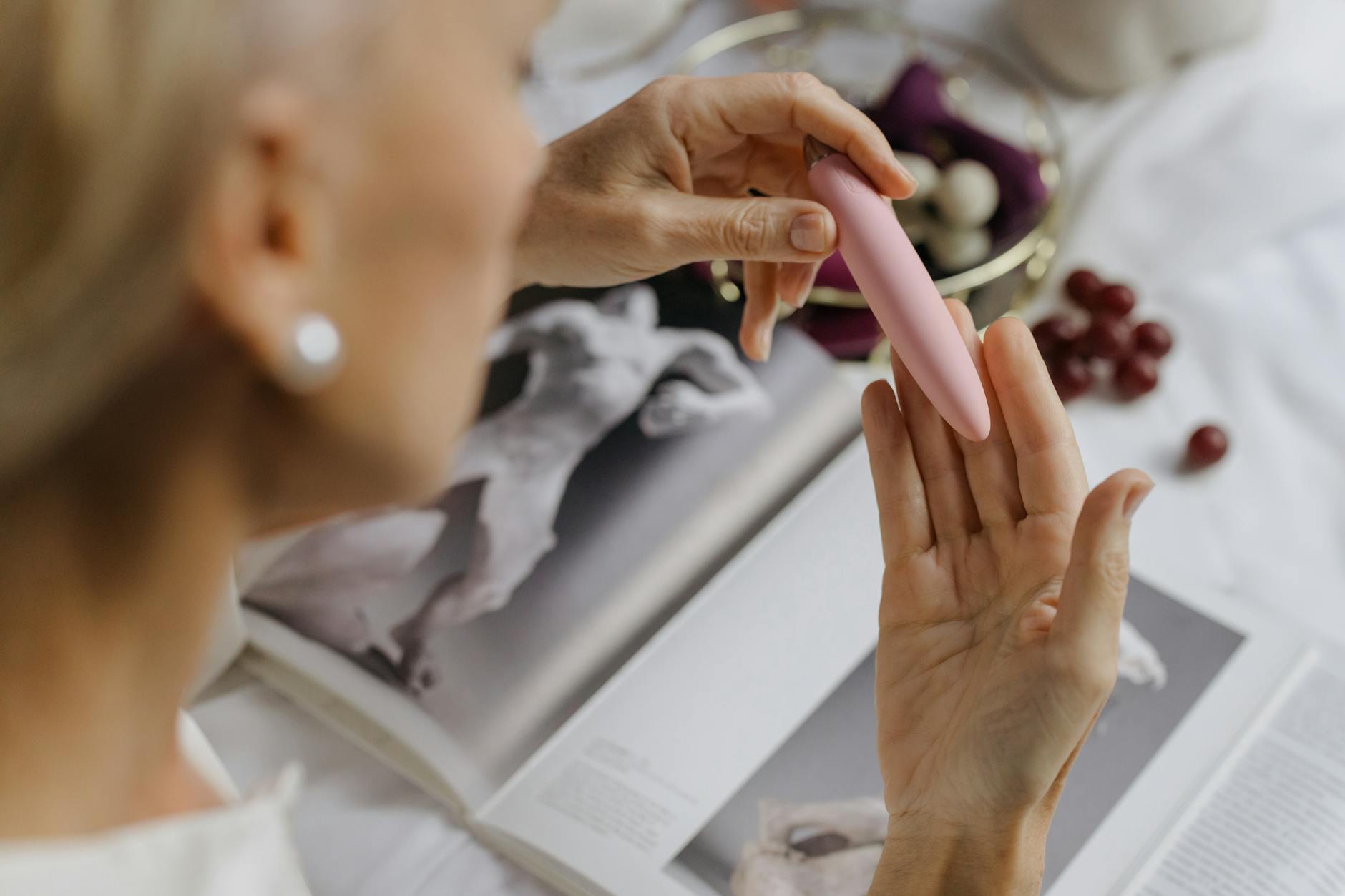
The thing about long-term partnerships and pleasure
Honestly, after five, ten, fifteen years together, sex often becomes... functional. You know each other's rhythm. You know what works. And that knowledge can feel like a cage instead of a foundation. Somewhere between familiarity and routine, the spark that used to live in anticipation just stops arriving.
Here's what I've seen in decades of working with couples: the couples who rebuild that spark don't do it by having "better" sex or more adventurous sex. They do it by having shared sex again. By being genuinely present with each other instead of performing an old script.
Lemon vibrators, specifically clitoral vibrators like the lemon toys Nancy Lemons makes, are one of the most straightforward ways to reset that presence. Not because vibrators are magic. But because they interrupt the routine and require a new kind of attention.
Why couples get stuck in pleasure deserts
Let's name what's happening first. After years together, several things converge:
Predictability flattens arousal. Your brain stops paying attention to things it expects. If sex with your partner follows the same sequence every time, your nervous system treats it like background noise. There's no novelty to wake you up.
Desire becomes one-directional. Usually one partner initiates and the other responds. Responding is passive. Passivity doesn't require presence. You can be somewhere else entirely and still participate.
Performance pressure kicks in. After so long, you worry about disappointing your partner or taking too long or not being attracted enough. That anxiety hijacks the experience.
External life eats focus. Work, kids, aging parents. Sex becomes another task to check off instead of something you actually want.
Notice what's true about all of these: none of them are about your body or your partner's body or attraction levels. They're about attention, novelty, and whether both of you are actually present. This matters because it means the solution isn't complicated.
How clitoral vibrators change the dynamics
When you introduce a lemon clitoral vibrator into partnered sex, something shifts immediately. First, the practical part: direct clitoral stimulation, especially the kind a lemon sucker or lem vibrator provides, typically produces faster arousal and more reliable orgasms. That matters. A lot. When both people can get there, the experience feels less performative and more mutual.
But the bigger shift is neurological. A vibrator requires someone to choose to use it. You're not just accepting what's happening. You're actively engaging with your own pleasure in real time. And when your partner watches that, or helps you use it, or feels your body respond to it. They're forced to pay attention. They have to be present.
I worked with a couple, Sarah and Michael, married 12 years. They hadn't used any toys. When Sarah brought home a lem vibrator, Michael's first reaction was insecurity. Like he should be "enough." That's the story a lot of long-term partners carry. But once they used it together, something clicked. Sarah's pleasure became visible and audible in a way it hadn't been in years. Michael had to slow down, pay attention to her timing, ask what felt good. He wasn't performing anymore. He was participating. The sex that followed was the best they'd had in a decade. Not because the vibrator was magic. Because they were finally actually together.
The conversation before you introduce anything
Don't just leave a vibrator on the nightstand. That strategy fails. Here's what works: have a conversation during daylight, not in bed, when you're both calm and clothed.
Start simple. "I've been thinking about our sex life. I want us to feel connected again, the way we used to." Name what you're noticing without blame. "Sex feels like routine lately" not "You never turn me on anymore."
Then be specific about what you want: "I want us to slow down. I want to try something new together. Something that gets us both present." Then ask. "Would you be open to exploring that with me?"
If they say yes, the next step is easy: "I was thinking about trying a vibrator together. Not because anything's wrong. Because I think it could help us feel closer." Share why. Share that you want their pleasure too, or that you want more time where both of you get to feel good. Not "I need this to orgasm" but "I think we'd both enjoy this."
If they're hesitant, listen. Common concerns are valid. "I feel like I'm not enough." "Will you eventually prefer it to me?" "I feel embarrassed about things like that." None of these are deal-breakers. They're just resistance you move through. Reassure them. "I want this with you, not instead of you." "This is something we're trying together."
How to actually introduce it
Order something you genuinely like the look of. The lemon clitoral vibrators from Nancy Lemons are design-forward, playful, and intentional. They don't look clinical. That matters for the moment.
When it arrives, don't rush into using it. Let it sit. Maybe you use it alone first, get comfortable with it. Then when you and your partner are intimate, say it clearly: "I want to try the vibrator together tonight. Would that feel okay?"
Start with slower patterns. The Lem vibrator and similar lemon toys have variable speeds for exactly this reason. Begin at pattern 1 or 2. You're not racing toward orgasm. You're learning what feels good while your partner watches. That watching is the whole point.
If you're the receiving partner, your job is to stay present. Notice what feels good. Make noise if you feel it. Ask for what you want. "Slower." "Stay there." "A bit more to the left." Every request, every sound, every moment of directedness is reconnection.
If you're the initiating partner, your job is to pay attention. Watch. Listen. Feel your partner's body respond. Ask questions. "Does that feel good?" "Want me to change the pattern?" You're not disappearing into your phone or your own anxiety. You're here.
What happens after the first time
Most couples tell me the sex immediately after using a vibrator together feels different. Better. More present. That feeling usually lasts. But integration takes time.
After you've used the lemon vibrator a few times, it becomes normal. And normal is good. It means it's not a novelty anymore. It's just part of your toolkit. But here's the key thing that happened before it became normal: you rebuilt a skill. The skill of being present with your partner during sex. Of paying attention. Of asking for what you want. Of responding to what they want. Of wanting to be there together.
That skill doesn't disappear when the vibrator becomes routine. You carry it forward.
Some couples use vibrators every time. Some use them occasionally. Some use them once and never again, but the closeness they restored stays. What matters is that using a vibrator together demands presence. It breaks the script. It makes you collaborate instead of follow a predetermined path.
The deeper work that happens
Here's what I tell couples in my practice: a vibrator isn't therapy, but it can open a door therapy lives behind. When you and your partner successfully share pleasure in a new way, you've just proven something: you can change together. You can try something outside your comfort zone. You can communicate about what you want. You can be curious about each other again.
That evidence matters. It transfers to other parts of the relationship. Couples who rebuild sexual connection often find conversation gets easier. Vulnerability gets easier. They start trying other new things, having other hard conversations, opening up in other ways.
I had another couple, James and Lisa, married 18 years, both scared their marriage was over. They weren't fighting. They were just... absent. Using a clitoral vibrator together became their entry point back to each other. Not because the vibrator fixed anything. But because the act of choosing to try something new, together, with vulnerability, with attention, reminded them that they still wanted to be married.
The vibrator was the catalyst. The work was showing up for each other.
What if you want to try solo first
Not every partner is ready to introduce toys immediately. If yours isn't, that's fine. You can use a lemon vibrator alone, get fully comfortable with it, understand what you like. Then when you're ready, you invite your partner to be present in a different way. "I want to show you something that feels good." You use it with them watching. You narrate what you feel. You let them see your pleasure clearly. That's intimacy too.
The lem vibrator and other lemon clitoral vibrators are designed for control and precision. You can start slow, build gradually, explore your own body in new ways. That solo exploration makes the partnered experience smoother when the time comes.
FAQ: Rebuilding intimacy with vibrators
Will using a vibrator make my partner feel inadequate?
Not if you approach it as "something we do together" instead of "something I need because you're not enough." The framing changes everything. Share that you want deeper connection, that you think trying something new together could bring you closer. Make it collaborative, not compensatory. Most partners move past initial insecurity quickly once they feel wanted and included.
How often should we use a vibrator if we want to rebuild connection?
There's no frequency rule. Some couples use clitoral vibrators weekly, some monthly, some just occasionally when they want to feel closer. The research on couples and sexual novelty suggests that variation, in general, maintains satisfaction. Use it when it feels right, not out of obligation.
Can we use a lemon vibrator if my partner finishes before me?
Absolutely. This is actually one of the best use cases for clitoral vibrators. If you typically take longer to orgasm, a vibrator lets you get there without your partner losing interest or getting tired. You both finish satisfied. That eliminates so much performance anxiety.
What if my partner refuses to try anything new?
Refusal is different from hesitation. Hesitation usually dissolves with conversation. Refusal is a signal that something deeper is happening. It might be shame, or it might be that they don't want to change the relationship. That's worth exploring separately from the vibrator question. Consider a couples therapist if you can't move past this together.
Is it better to use the Lem vibrator alone or with a partner inside me?
Neither is objectively better. Some people like clitoral stimulation while being penetrated. Others prefer clitoral focus without penetration. The vibrator gives you both options. Experiment. Ask your partner what feels good. The answer will probably surprise you both.
How do we keep things feeling fresh after introducing vibrators?
Novely lives in attention, not in the toy itself. Once a vibrator becomes familiar, what keeps things fresh is presence. Trying different positions. Paying attention to new sensations. Talking during sex. Asking questions. The vibrator opened a door. Your attention keeps it open.
Rebuilding starts with showing up
I want to be direct about this. Long-term relationships don't fail because of sexual boredom. They fail because partners stop showing up for each other. You can use every vibrator Nancy Lemons makes and still feel disconnected if you're not genuinely present.
But when you do show up? When you decide to try something new together, to be vulnerable, to ask for what you want, to really look at your partner while they're experiencing pleasure? That's when sex becomes connection again. The vibrator is just the permission slip. You do the real work.
Start that conversation. Order something you like. Show up for each other. Watch what happens.