Here's what nobody tells you about postpartum sensation
Your clitoris didn't go anywhere. But the nerves feeding it, the pelvic floor holding it all in place, and your brain's ability to access pleasure during the fourth trimester? Those have temporarily relocated. This is normal. This is also deeply weird, and it matters that we say so directly.
Most postpartum guides cover bleeding, sleep, and mental health. They skip over the fact that touch might feel numb, too sharp, completely absent, or weirdly scrambled. If you're waiting for sensation to snap back the way it was during pregnancy or before, you're going to be disappointed. What you're actually waiting for is a gradual, nonlinear reawakening that might look different than anything you've felt before.
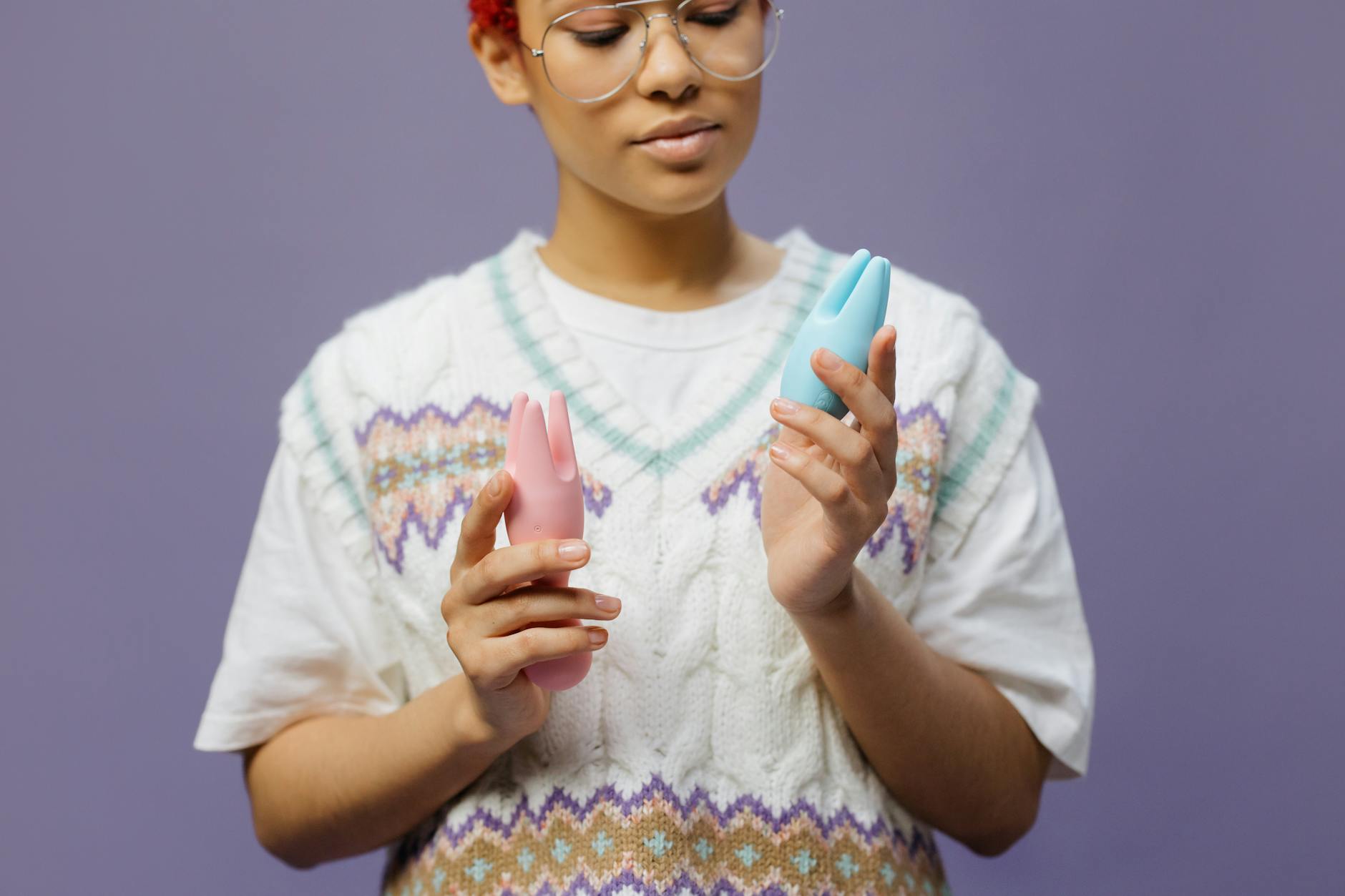
Lemon clitoral vibrators, particularly their air-suction design, work beautifully during this phase because they don't demand the kind of nerve sensitivity that traditional friction-based toys require.
Why postpartum sensation shifts in the first place
Three things happen to your nervous system during pregnancy and birth that directly affect clitoral sensation.
The pelvic floor gets stretched. Labor stretches the skin, tissue, and nerves in your vulva. If you had an episiotomy or tore, that area is healing and reorganizing nerve pathways. Even with a planned cesarean, your pelvic floor has been compressed under your baby's weight for months. Those muscles and the nerves that feed through them need time to rebuild proprioception (the awareness of where your body is in space). Without that, stimulation can feel muted.
Hormone levels are on a cliff. During pregnancy, estrogen and progesterone are high. They flood the vulva with blood, which heightens sensitivity. After birth, those hormones plummet. The tissues thin slightly, blood flow normalizes, and suddenly what felt electric at 38 weeks feels like touching someone else's hand. If you're breastfeeding, prolactin remains elevated, which further suppresses desire and sensation. This is temporary, but temporary can feel like permanent when you're sleep-deprived.
Your brain is elsewhere. Postpartum attention is fragmented by survival mode. Your nervous system is running on alert for your newborn's needs. Even if your body is ready for touch, your mind often isn't available to register pleasure until around month four or five. That's not broken. That's survival.
When it's actually safe to explore sensation again
If you had a vaginal delivery with minimal tearing, most practitioners clear you for penetration around six weeks. If you had significant tearing, an episiotomy, or a cesarean, the timeline stretches. Ask your midwife or OB/GYN directly: "Am I cleared for external clitoral stimulation?" Many providers say "penetration is off limits" and forget that external play is often safer earlier.
What you're cleared for medically and what feels good emotionally are two different conversations. Some people feel ready at eight weeks. Others don't reconnect with their clitoris until month six or later. That range is completely normal.
Start with something you know feels safe: your own hand, a non-vibrating massage, or the gentle sensation of a silicone toy without power. Let that baseline reestablish itself before adding vibration.
How lemon clitoral vibrators fit into postpartum sensation recovery
Lemon vibrators, and particularly air-suction designs like the Lem, work differently than traditional vibrating toys. Instead of friction, they use gentle suction and pulsing air patterns to stimulate the clitoris. That matters postpartum for three reasons.
First, suction doesn't require acute nerve sensitivity. Your clitoris doesn't need to feel sharp, defined touch to respond to suction. The sensation is broader, less demanding. Many people find that numbness or scrambled sensation that makes traditional vibration frustrating actually disappears with suction stimulation. Your nervous system can register the pressure and pulse without needing fine-tuned sensation accuracy.
Second, you can start at impossibly low settings. The Lem cycles through power levels that let you begin so gently that stimulation almost feels incidental. You're not choosing between "barely anything" and "too intense." You can spend weeks at settings 1 and 2, letting your nervous system slowly reacclimatize to pleasure without pushing it.
Third, suction mimics a sensation pattern that's closer to what your body experienced during pregnancy. During pregnancy, increased blood flow and sensitivity create a full, almost pressurized sensation in the clitoris. Suction-based vibrators recreate that engorgement feeling in a way that can feel more familiar and less jolting than traditional vibration.
The practical recovery framework
If you're cleared for external play and ready to gently reawaken sensation, here's how I walk clients through it.
Weeks 1-2 (cleared for external play). No toys. Use your own hand to notice what sensation feels possible. Stroke, press, hold pressure. Don't aim for arousal. Aim for noticing: "This feels numb," "This feels sharp," "This feels warm." Data collection, not performance.
Weeks 3-4. Introduce a lemon clitoral vibrator at settings 1 or 2, five-minute sessions, no expectation of orgasm. You're teaching your nervous system that this type of touch is safe and available. Many people find that brief, low-intensity sessions actually build anticipation better than longer sessions anyway. Your nervous system is still running on alert.
Weeks 5-8. Stay with low settings, but gradually extend sessions if it feels right. Some days sensation snaps into focus. Other days it feels distant again. That's normal. You're not linearly recovering. You're spiraling upward, with variation.
Month 3 and beyond. If sensation has stabilized, you can begin exploring higher settings and longer sessions. But honestly, many people find they prefer the lower, gentler patterns even once they're fully healed. You've learned what your nervous system actually wants when you're not performing for someone else.
Managing the emotional layer alongside the physical one
Postpartum sensation recovery isn't purely physical. You're also navigating:
Identity shift. Your body just did something extraordinary, and you might feel possessive of it, exhausted by it, or distant from it. Touch can feel like another demand. Give yourself permission to not be ready. Permission isn't weakness.
Partner dynamics. If you're partnered, they might be eager, uncertain, or also struggling with identity shift. How to Use Lemon Vibrators With a Partner Who's Newly Interested covers that separately, but the short version: solo exploration first, shared exploration later.
Touch aversion. If you're touched out from constant baby contact, the idea of adding sexual touch might feel nauseating. That's common and temporary. Respecting your "no" to touch right now actually makes the eventual "yes" more authentic.
When to seek additional support
If numbness or scrambled sensation persists beyond six months without improvement, mention it to your provider. Pelvic floor physical therapy can help reestablish nerve pathways and muscle function. It's not a fix that gets you back to "before." It's a reset that helps your nervous system understand the new layout.
If sensation recovery feels like it's triggering postpartum anxiety or depression, that's worth naming to a therapist or psychiatrist. Pleasure reconnection and mental health recovery are intertwined. You can't force arousal while you're in fight-or-flight mode.
If your partner is becoming frustrated with the timeline, that's a conversation for a couples counselor, not for you to rush your own recovery. Your pleasure isn't a service you're providing. It's something you're rebuilding for yourself.
The long view
Many people discover that postpartum sensation recovery actually offers a gift: the chance to relearn your body from scratch, without the muscle memory of how you thought you were supposed to respond. You might find that lemon clitoral vibrators, with their gentle suction pattern, actually becomes your preferred option long-term. Or you might use them during recovery and then shift to something else.
There's no race to get back to baseline. Baseline was built for a different version of your life. Your postpartum nervous system isn't broken. It's reorganizing. And when your libido returns after birth, it might surprise you with what it actually wants.
FAQ: Postpartum sensation and lemon vibrators
How soon after giving birth can I use lemon vibrators?
If you had an uncomplicated vaginal delivery with minimal tearing, most providers clear external stimulation around four to six weeks. If you had significant tearing, an episiotomy, or a cesarean delivery, ask your midwife or OB/GYN directly, because healing timelines vary. The general rule: wait until you're cleared for external play, which is usually earlier than internal play. If you're unsure, ask. Your provider would rather answer this question directly than have you guessing.
Why does my clitoris feel numb after birth?
Three factors: hormones have plummeted, your pelvic floor is healing and relearning where it is in space, and your nervous system is in survival mode. All three contribute to sensation that feels muted or scrambled. This is temporary. Most people notice gradual improvement over three to six months, though some take longer. Pelvic floor physical therapy can accelerate the process if numbness is persistent.
Can using a lemon vibrator too soon damage my recovery?
If you're cleared for external play, gentle lemon vibrator use at low settings won't damage healing tissue. That said, respect discomfort. If touch hurts, feels raw, or triggers anxiety, wait longer. Recovery isn't linear. Some weeks you feel ready, other weeks you don't. Use lemon clitoral vibrators when your nervous system signals yes, not when you think you should be ready.
Should I use lemon vibrators solo first or with my partner?
Solo first, almost always. You need to know what your own nervous system responds to before adding the complexity of partner presence, performance pressure, and someone else's arousal timeline. Spend two to four weeks exploring alone, with no expectation of orgasm. Then, if it feels right, share that experience with a partner. That order actually makes partnered pleasure better, not worse.
Do I need to use lube with a lemon vibrator postpartum?
Yes, usually. Postpartum tissues are thinner and less lubricated, especially if you're breastfeeding. Water-based lube makes suction-based vibration feel smoother and reduces friction on sensitive skin. Use whatever feels good. There's no "right" amount. Add more if it stops feeling comfortable.
What if sensation returns unevenly or feels different than before?
That's normal. Birth reshapes your nervous system slightly. Some people find their clitoris is actually more sensitive after recovery. Others find they prefer gentler, longer stimulation. Some discover new patterns that feel better than anything from before. This isn't worse. It's different, and different can be genuinely good once you stop measuring it against a ghost version of your body.
Your postpartum body isn't broken. It's reorganizing. Lemon vibrators, with their gentle approach and low-intensity options, are built for that exact recalibration. Give yourself time, trust your own nervous system, and know that rediscovering pleasure on your new body's timeline is worth every patient week.