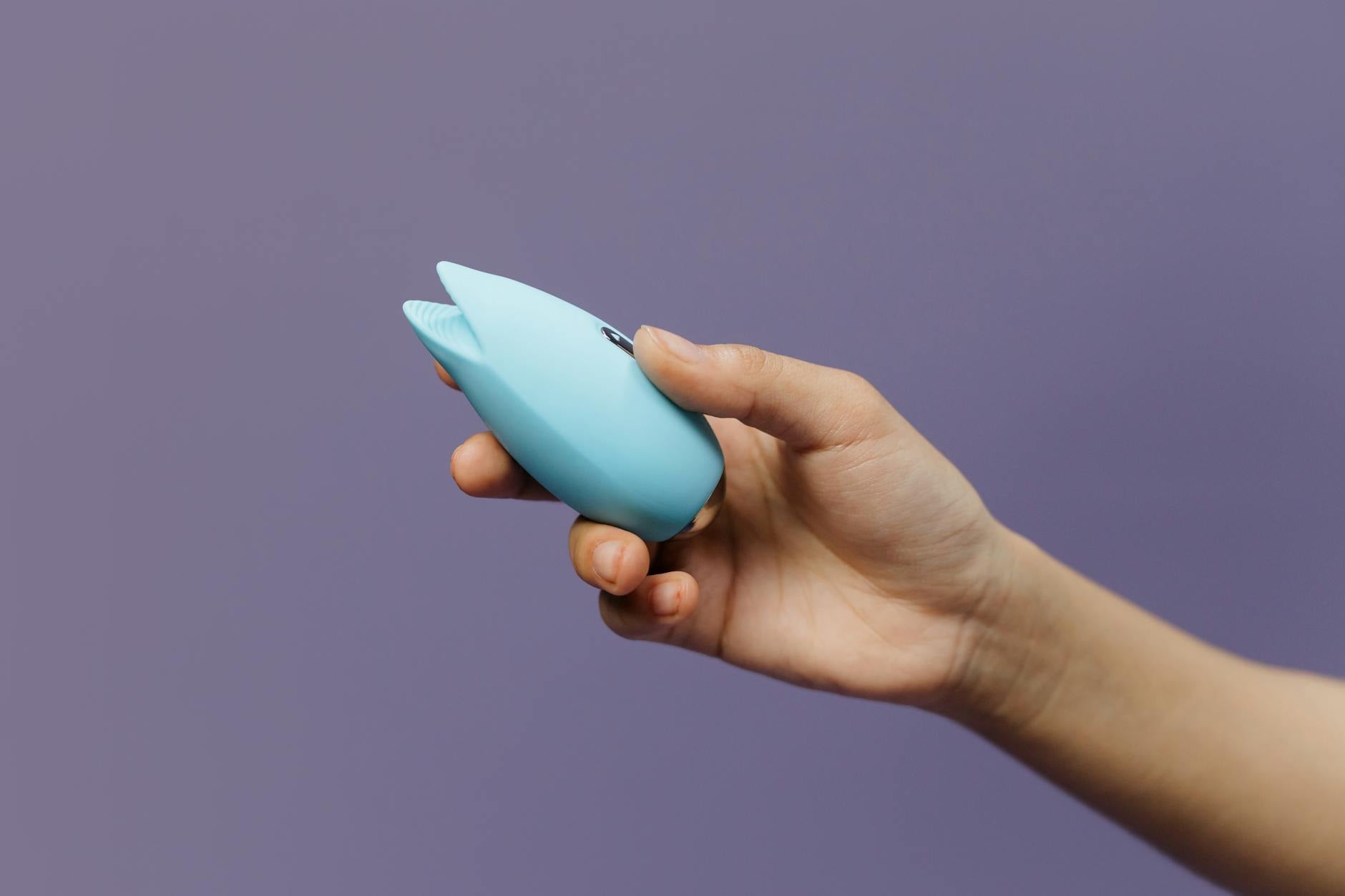
Here's the thing about traditional vibrators
They buzz. That's literally their job. Your phone vibrates to alert you. A standard vibrator does the same thing against your clitoris, just with more surface area and adjustable intensity. For decades, this was the only mainstream option, which is why so many people assume vibrators are all basically the same. They're not.
The clitoris has about 8,000 nerve endings concentrated in a small area. Traditional vibration stimulates them through rapid, repetitive movement. It works. But it's not the only way to trigger arousal and orgasm, and for many people, it's not the most effective way.
What lemon clitoral vibrators actually do differently
Lemon vibrators use air-pulse or suction-based technology instead of pure vibration. Rather than buzzing against tissue, they create a pulsing sensation that feels more like a gentle sucking motion. The difference is neurological, not just sensory.
When you experience suction, your body registers it through a different set of nerve pathways than vibration alone. This matters because:
Traditional vibration primarily stimulates fast-adapting nerve fibers. These respond quickly but also fatigue quickly, which is why you might feel buzzing intensity drop over time.
Suction-based stimulation activates both fast-adapting and slow-adapting nerve fibers. Slow-adapting fibers don't fatigue the same way, meaning sensation stays consistent longer. For many people, this feels like more intense pleasure that doesn't numb out mid-session.
Think of it like the difference between someone tapping your arm repeatedly and someone squeezing it. Same area of skin, different nerve response.
The sensation difference in real terms
I hear this from clients consistently. "Vibration felt surface-level. This feels deeper." That's not metaphorical. When slow-adapting nerve fibers engage, the stimulation registers as having more depth and texture, even though the toy isn't actually going inside you.
Lemon vibrators also allow you to build sensation more gradually. Because suction doesn't fatigue nerves the same way, you can stay in the arousal phase longer without hitting a plateau. The patterns on air-pulse toys often mimic the natural rhythm of arousal itself. Your heart rate doesn't spike and crash; it builds steadily.
With traditional vibrators, people sometimes describe hitting a wall. Sensation peaks, then plateaus, then either stays flat or requires turning up the intensity to feel anything at all. This is nerve adaptation in action. With air-pulse technology, you're more likely to experience a continuous intensity curve rather than a spike-and-plateau.
Why this matters for different bodies
If you've ever felt numb during sex or struggled to reach orgasm with a partner, air-pulse stimulation can feel like a different experience entirely. It's not that traditional vibrators are "bad." It's that they engage your nervous system differently.
For people with lower clitoral sensitivity, suction-based toys often feel more pronounced because they're activating additional nerve fibers. For people with higher sensitivity, the gentle pulses of a lemon clitoral vibrator can feel more manageable than the intensity of direct vibration.
This is also why the sensation adjusts better to different body chemistry. When lubrication or tissue thickness changes (whether from hormones, age, or medication), suction-based stimulation adapts more gracefully than vibration. The technology doesn't rely on friction the same way.
If you've been using traditional vibrators and felt like you were forcing the experience, it might not be that your body doesn't respond well to toys. It might be that you haven't found the right type of stimulation yet. A lemon sucker works through a fundamentally different mechanism.
The research behind air-pulse technology
Studies on air-pulse devices show significantly higher orgasm rates compared to traditional vibration alone. One clinical study found that approximately 87% of participants experienced orgasm with air-pulse technology versus 64% with standard vibration. That's not a small difference.
What makes this interesting is that participants weren't necessarily people who "weren't responsive" to traditional toys. Many had used vibrators for years. The air-pulse technology simply worked better for their nervous system.
The reason is rooted in basic neurology. The clitoris shares the same nerve pathways as other erogenous zones. When you experience suction, it mimics sensations that activate pleasure response patterns throughout your body. Your brain recognizes the rhythm and responds accordingly. With pure vibration, you're asking your body to interpret continuous buzzing as erotic, which can feel abstract or numbing over time.
Why the pattern matters as much as the technology
Here's something most people don't realize. The pattern is often more important than the intensity. A lemon vibrator with a pulsing pattern can feel stronger than a high-powered traditional vibrator on its highest setting, even though the actual power output is lower.
This is because your nervous system responds to rhythm. Arrhythmic buzzing can actually suppress arousal. Patterned pulses that mimic natural arousal rhythms enhance it. Your heart rate during arousal doesn't buzz constantly. It gradually accelerates in waves. Air-pulse toys often mirror this natural pattern, which is why they feel so effective.
That's also why people who thought they "couldn't" orgasm with toys sometimes orgasm easily with a lemon clitoral vibrator. It's not that they were broken. The previous toy wasn't speaking the language their nervous system was built to understand.
Comparing sensation across different toy types
Traditional vibrators excel at broad stimulation. If you want to warm up your whole vulva, they work well. But if you want concentrated, building intensity leading to orgasm, lemon vibrators typically outperform them.
Bullet vibrators are popular because they're small and discreet, but that form factor works against them neurologically. The vibration is concentrated on an extremely small surface, which can feel intense but also numbing. Air-pulse toys distribute the sensation more naturally across the tissue, which feels more like whole-body pleasure rather than isolated buzzing.
Wand vibrators work through broad, vibrating movements. They're great for some people but can feel too intense or too surface-level for others. A lemon sucker like the Lem offers a completely different sensation profile. It's not a wand. It's not a bullet. It's a specific technology that your body may not have encountered before.
The comfort angle you don't hear about
One more thing. Because air-pulse toys don't rely on friction-based stimulation the same way, they're gentler on sensitive tissue. If you've experienced irritation, rawness, or soreness with traditional vibrators, that might be because the continuous buzzing was creating micro-friction that your tissue didn't tolerate well.
Suction-based stimulation doesn't have the same effect. Many people find that they can use air-pulse toys longer without discomfort. This matters because it gives your body time to actually build arousal without distraction. When you're not braced against potential irritation, the whole experience shifts.
It also means lemon clitoral vibrators work better with less lubrication. You still want some, but you're not dependent on it the way you are with friction-based toys. For people dealing with changes in natural lubrication, this is genuinely life-changing.
Making the switch
If you've been using traditional vibrators for years, air-pulse technology might feel weird at first. Your body is used to one type of input. Give it a few sessions. Most people report that within 3-5 uses, the sensation clicks and feels not just different but noticeably better.
Start with lower intensity settings. Because slow-adapting nerve fibers stay engaged longer, you might not need to go to the highest setting to feel satisfied. Many people find they prefer medium or lower patterns on lemon vibrators to high intensity on traditional toys. That's not a sign the toy isn't working. It's a sign your nervous system is engaged more effectively.
Try it during different parts of your cycle or different times of day. Arousal quality fluctuates. An air-pulse toy might feel transcendent when you're relaxed and mediocre when you're stressed, just like any toy. But the difference in quality between your best and worst sessions will likely be less dramatic than with traditional vibration.
People also ask
How do lemon vibrators differ from other suction toys on the market?
Most suction toys use the same basic air-pulse mechanism, but design details matter. The size and shape of the suction opening, the intensity range, and the pattern variety all affect how the toy feels. A well-designed lemon clitoral vibrator like the Lem is engineered specifically for the clitoris, with an opening and intensity curve optimized for nerve response. Cheaper suction toys sometimes feel gimmicky because they prioritize novelty over sensation design. Quality matters.
Can men use lemon vibrators or is it just for vulva-owners?
Air-pulse technology stimulates nerve endings. The penis has lots of nerve endings too. Partners sometimes discover they really enjoy air-pulse toys, though they typically prefer them on different body parts. Some couples use lemon vibrators together during partnered sex. The technology isn't gendered; the application might vary.
Do you need special lubricant for lemon vibrators?
No. Water-based lubricant works perfectly fine. Silicone-based lube can damage the silicone toy body over time, so stick with water-based. The good news is that air-pulse toys don't require as much lube as friction-based vibrators. You can start with less and add more if you want to. This makes them easier to use in different situations.
Will a lemon vibrator work if I'm desensitized from using regular vibrators too much?
Desensitization usually isn't permanent. When people switch to air-pulse technology, their nerve endings re-sensitize surprisingly quickly. Within a week or two of using only suction-based toys, most people report heightened sensation returning. It's not that your body is permanently broken. You just switched to a different stimulus that your nervous system is built to respond to differently.
Are lemon vibrators better for people with anxiety about sex toys?
Yes, often. Because they work differently and many people experience faster, more obvious results, they can build confidence. If you've tried traditional vibrators and felt nothing or felt uncomfortable, a lemon clitoral vibrator might be the thing that changes your mind about toys altogether. The technology is different enough that it's worth trying even if other vibrators didn't work for you.
How long does it take to orgasm with a lemon vibrator compared to traditional vibrators?
It varies by person, but studies suggest slightly faster orgasm onset with air-pulse toys, and more consistent orgasms overall. Some people who struggled to orgasm with traditional vibrators find it easier with lemon vibrators. Others find their orgasm time is similar but the quality of orgasm is noticeably stronger. The real benefit is usually consistency, not speed.
The bottom line
Lemon vibrators work through a different neurological mechanism than traditional vibrators. They activate additional nerve pathways, create less sensory adaptation, and often feel more intense and longer-lasting. If you've tried standard vibrators and felt nothing, felt numb, or wanted something that builds sensation more naturally, air-pulse technology might be exactly what you've been looking for.
The best part? Once you understand how different these tools are, you can stop assuming your body doesn't respond to toys and start exploring what actually works for your unique nervous system.
Ready to explore what works for you? Reach out to our team with questions about which lemon vibrator might be the right fit, or check out our guide to choosing your first device for a more detailed walkthrough.