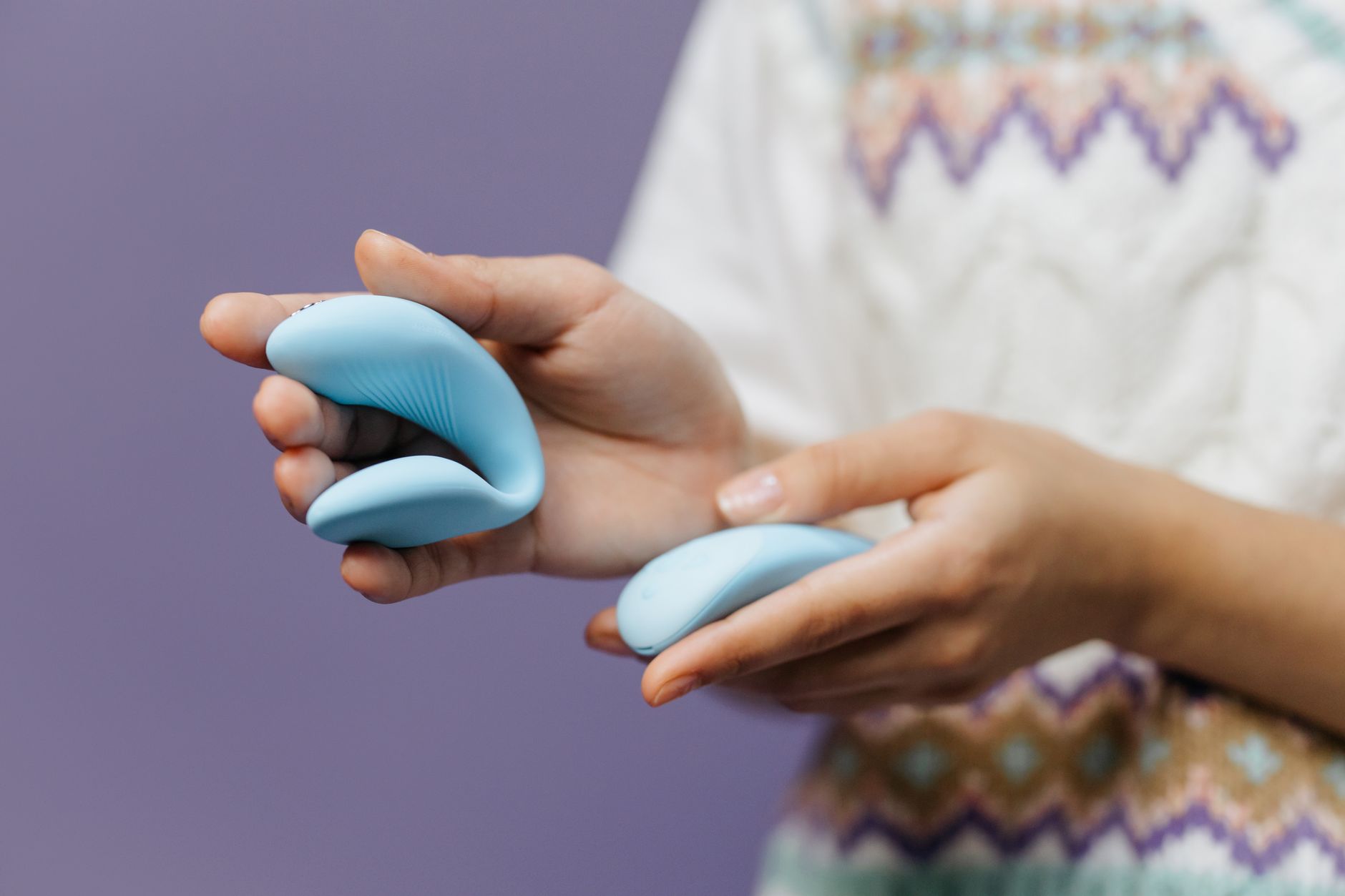
How to Use Lemon Vibrators When Exploring Solo Pleasure After a Long Relationship
Here's what nobody tells you about the breakup phase: the sex thing isn't actually about missing someone. It's about suddenly not knowing what you want anymore.
After years of partnered pleasure, your body learned to respond to someone else's rhythm, someone else's preferences, someone else's timeline. You optimized for connection. You might have even optimized for their orgasm more than your own, which is... honestly pretty normal in long-term relationships. But now that rhythm is gone, and you're standing in front of your own pleasure with no script.
That's where lemon sexual toys come in. But not the way you might think.
The honest difference between solo and partnered pleasure
Let me be direct: your body hasn't forgotten how to have an orgasm. What it has forgotten is how to have one for itself. That's different.
In a partnership, pleasure often comes wrapped in emotional attachment, physical familiarity, and years of learned patterns. Your nervous system knows what's coming. Your brain knows the endpoint. When you strip all that away, your body has to learn a new language entirely. There's no anticipation of someone else's touch. No mirroring of someone else's desire. Just you, your body, and what actually feels good when nobody's watching.
This is why lemon vibrators are particularly useful here. They're not trying to replicate a partner. They're designed to stimulate in a way that's entirely self-directed. You control the pattern, the intensity, the rhythm. No negotiation. No compromise. Just sensation.
Starting with zero pressure (literally)
Most people approach solo play after a relationship with some version of expectation attached. "I should want this." "I should get there quickly." "This should feel amazing immediately." None of that is helpful.
Instead, start by treating your first few sessions as pure exploration with no outcome goal. You're not trying to have an orgasm. You're trying to relearn what your body actually responds to when there's no external pressure.
With a clitoral vibrator like the Lem, begin at the lowest setting, pattern 1 or 2. Spend at least 10-15 minutes just learning the sensation. Your clitoris has 8,000 nerve endings. Most of us never actually map them properly because partnered sex moves too fast. This is your chance.
Notice what happens when you hold the vibrator still versus moving it in circles. Notice the difference between the tip and the broader suction surface. Notice where sensation feels concentrated versus diffuse. This isn't foreplay to something else. This is the point.
Why suction works differently when you're alone
Lemon clitoral vibrators use air-suction technology, which is genuinely different from standard vibration. Instead of buzzing against tissue, suction gently pulls, creating a sensation that builds gradually rather than intensifying immediately.
When you were partnered, you might have preferred faster escalation. You were matching someone else's arousal curve. Now, you can actually feel what you prefer when there's no one else's timeline in the room. Many people discover they want slower builds, longer plateaus, and more control over the path to orgasm.
Start with the basic suction pattern and stay there for several sessions. Don't jump through all five patterns in one go. Your nervous system needs time to recognize and anticipate the sensation. Familiarity is actually arousing once it's established.
The private space matter (and it's bigger than you think)
You might think privacy is just about not getting caught. It's actually about your nervous system's ability to let go.
For years, part of your attention was always on your partner's experience, their comfort, their pleasure. Even if you had good sex, a portion of your brain was never fully in your own body. Solo play after a relationship requires you to reclaim that mental real estate entirely.
This means: locked door, phone elsewhere, no background noise you'll jump at. Not because shame, but because your parasympathetic nervous system (the relaxation system) needs to feel genuinely safe to do its job. Tension from noise or interruption risk keeps you locked in your head.
Light a candle if that helps signal "this time is for me." Put on music or white noise. Make it feel intentional and bordered off from the rest of your life. This is the opposite of sneaking around. This is claiming space.
Rediscovering your own arousal sequence
In long-term relationships, foreplay often follows a predictable script. You probably knew it so well you could skip to the middle. Solo play lets you rebuild it entirely, and you might discover your actual preference is nothing like the one you developed with a partner.
You might find you need more time with indirect stimulation before touching your clitoris directly. You might discover you like building arousal over 30 minutes when a partner might have lost patience at 10. You might realize you want more mental space to fantasize, or less. You might find that what worked for penetrative sex isn't what works for clitoral pleasure at all.
With a lemon clitoral vibrator in hand, you get to test all of this without negotiation. Move to different rooms. Try different positions. See whether you prefer lying down, sitting, or standing. Notice whether you want your legs together or apart, whether you prefer a full-body sensation or hyper-focused attention on one area.
This information is valuable. Not just for solo play, but if you eventually partner again. You'll know what you actually want instead of what you got comfortable with.
The surprising emotional piece
Solo pleasure after a long relationship is often surprisingly emotionally heavy. You might find yourself getting tearful, or angry, or grieving mid-session. That's normal and doesn't mean anything's wrong.
Your body has spent years associating pleasure with emotional connection to another person. Separating those two things triggers a grief response sometimes. You're not sad because the relationship ended. You're grieving the specific shape your pleasure took in that partnership, even if it wasn't actually serving you.
Let it happen. If you need to stop, stop. If you want to cry and then continue, continue. Your solo sessions aren't about pushing through to a specific outcome. They're about slowly remaking the relationship between you and your own body. That takes time.
Patterns and progression (without rushing)
Once you've spent a few sessions with pattern 1 or 2 on your lemon vibrator, you can start exploring the other patterns. But "exploring" means trying them for full sessions, not cycling through them like a menu.
Spend at least three to five sessions with each pattern before moving to the next. Let your nervous system really know what it feels like. You'll start noticing which pattern builds arousal most effectively for you, which one feels best during the plateau, which one gets you closest to orgasm, and whether you actually prefer finishing with a different pattern than you started with.
This is the opposite of how partnered sex often works, where speed and novelty matter. Here, repetition and familiarity are tools. They deepen sensation rather than dull it.
The orgasm question (and why it's not the point)
If you don't have an orgasm in your first five solo sessions, that's completely fine. Your body is rebuilding its relationship with pleasure in an entirely new context. Sometimes that takes time.
If you do have an orgasm, notice what was different about the session. What pattern were you using? How long had you been going? What were you thinking about? Were you focused on sensation or was your mind somewhere else? This data matters because it teaches you about your own arousal.
After a long relationship, many people find their solo orgasms actually feel different than partnered ones. Deeper sometimes. More localized other times. Less intense occasionally. All of that is information, not failure.
Building a actual solo practice
Rediscovering solo pleasure isn't a one-time experiment. It's a practice you're establishing for yourself. Ideally, this becomes a regular thing, not something you squeeze in when you're bored or lonely.
Try scheduling it the way you'd schedule exercise: maybe twice a week, maybe once, whatever feels sustainable. It doesn't need to be long. Even 15 minutes of focused touch with your lemon clitoral vibrator maintains the neural pathways you're rebuilding.
This regular practice does something beyond the immediate physical sensation. It reminds your nervous system that your pleasure is valuable and worth time and attention. It trains your brain that your body deserves care even when there's no partner involved. That's actual self-care, not the candle-and-bath-bomb version.
When you're ready to understand yourself better
If you've spent months exploring solo and you're still feeling disconnected or numb, or if you realize you never actually had satisfying partnership sex to begin with, that might be worth exploring with a therapist who specializes in sexuality. Sometimes the numbness is actually revealing something important: maybe you never felt safe in that partnership, or maybe you learned to suppress your own desire over years.
Solo play with lemon sexual toys is a beautiful way to reconnect with your body. But it's also a form of self-knowledge. If it's raising questions about what you want, what you've accepted, or what you're avoiding, those questions matter too.
You're not starting from scratch
Even though it feels like you are, your body remembers how to feel pleasure. It might not remember how in this new context, but the capacity is still there. Lemon vibrators make that rediscovery feel less lonely and way more intentional than fumbling around on your own.
You deserve to know what your own pleasure looks like. Not what your partner preferred. Not what you thought you should want. Not what you've always done. Just you, your body, and a lem vibrator on pattern 2 at 2 a.m. on a Tuesday, finally figuring out what actually feels good.
That's the real starting point. Everything else is just practice.
People also ask
How long does it usually take to feel comfortable with solo pleasure again after a long relationship?
There's no single timeline, but most people report that it feels natural again after 4-8 weeks of consistent exploration. The first few sessions are usually awkward or uncomfortable. By week three or four, your nervous system starts recognizing the pattern and relaxing into it. By week six or eight, you're often not thinking about it being "solo" anymore. You're just experiencing pleasure. If you're still feeling disconnected after two months of regular practice, that's worth exploring with a therapist. Sometimes numbness is revealing something deeper about the relationship you just left.
Is using a lemon clitoral vibrator different from using your hands?
Yes, meaningfully so. Your hands can get tired, which breaks focus. Your hands provide consistent pressure in a way that can feel repetitive. A clitoral vibrator like the Lem offers patterns and intensities you can't replicate manually, and because you're not actively moving it, your whole focus stays on sensation rather than mechanics. That said, many people benefit from alternating between hands and vibrators. Your hands offer more variability and control. A vibrator offers more sustained, specialized stimulation. Both are valuable.
What if I feel guilty or ashamed exploring solo pleasure after my relationship ended?
That shame often comes from one of two places. Either you learned to associate your pleasure with partnership (so solo pleasure feels "wrong"), or you're experiencing some lingering loyalty to your ex, which is actually pretty common. Guilt fades when you remind yourself that your pleasure is for you, not against anyone. Your ex's pleasure is their responsibility now. Yours is yours. If shame persists, it might be worth exploring with a therapist. Sometimes we inherit shame messages about sexuality that need active work to untangle.
Can using lemon vibrators too much make my clitoris numb?
This is a real concern people raise, but the research doesn't support it. Your clitoris has 8,000 nerve endings and doesn't "wear out" from stimulation. That said, if you notice decreasing sensation over time, it's usually because your nervous system is adapting to the stimulus (like your ears adapting to background noise). The solution is to vary your patterns, take breaks between sessions, or switch between vibrators. Most people find that taking one or two days off between sessions actually increases sensation because your nervous system resets. You're not damaging anything.
Should I be fantasizing during solo sessions, or is that a distraction?
Neither. Some people naturally fantasize during solo play. Some people focus entirely on sensation. Some people's minds wander. All of that is fine. After a long relationship, you might find that fantasy feels weird or unfamiliar, especially if you spent years with one partner. That's normal. Over time, as you get more comfortable with your solo pleasure, your fantasy life often naturally reawakens or shifts. Don't force it. Just notice what your mind wants to do and let it. The point is connection with your body, not a specific mental state.
When should I tell a future partner that I've been exploring solo with vibrators?
That's entirely your call. You don't owe anyone an itemized history of your solo practice. If you eventually partner again and want to incorporate vibrators into shared sex, that's a different conversation. But solo exploration is yours. What you share about it is up to you. Many people find they don't mention it unless it becomes relevant. And if it does, you'll know what you want and what feels good, which actually makes partnered sex easier to navigate. You'll be able to ask for what you need instead of guessing.
Resources and further reading
If you're interested in understanding your body's arousal response more deeply, "Come As You Are" by Emily Nagoski offers excellent science on how context shapes pleasure. For the emotional side of restarting after a relationship, the Gottman Institute has research on how to rebuild individual identity after partnership. And if shame around solo pleasure feels sticky, a sex-positive therapist can help you work through inherited beliefs that might be getting in the way.
Your solo practice with lemon vibrators isn't just about physical pleasure. It's about reclaiming your body as your own. That's radical and it matters.