
Here's what I hear most often
You want to orgasm. You're capable of orgasming. But somewhere between arousal ramping up and the actual release, something locks. Your brain goes quiet, your body tenses, the sensation flattens. Sometimes you push through to climax anyway. Sometimes you just stop.
This is not a medical problem. This is an anxiety problem wearing a physical disguise.
Why the buildup scares you (and how suction changes that)
Most of us learn early that pleasure has a cost. Maybe it's religious messaging, maybe it's a partner who made you feel guilty, maybe it's just the cultural message that wanting sex too much makes you needy or broken. Whatever the root, by the time you're an adult, your nervous system has learned a pattern: as arousal climbs, so does the voice telling you to slow down, check yourself, be careful.
That voice shuts down the very sensation you're chasing.
Here's what lemon vibrators do differently than traditional vibrators. They use suction, not vibration. Suction activates pleasure without creating the same kind of friction-based intensity that often trips the anxiety switch. You're not building toward something overwhelming. You're being drawn into pleasure steadily, gently, predictably.
Most people find that suction feels safer to surrender to. It's different enough from your own hand that your brain doesn't immediately go into the familiar "manage your excitement" mode.
The anatomy of orgasm anxiety
Let me break this down clinically so you understand what's happening in your body.
When arousal builds, your sympathetic nervous system activates. This is the "go" system. Breathing gets faster, heart rate climbs, muscles tense in preparation. This is all correct and good. But anxiety hijacks this process. Your parasympathetic nervous system (the "brake") starts sending competing signals. Your body gets mixed messages: accelerate and stop simultaneously.
The result feels like a plateau. Sensation either stays flat or actually dims as you approach climax.
The fix is not to push harder. The fix is to trust the buildup enough that your parasympathetic system stops fighting it. And that's where the lemon vibrator's predictability matters. Because suction creates a consistent, rhythmic sensation, your nervous system can predict what comes next. That predictability is calming. Your brake system relaxes.

Photo by Enric Cruz López on Pexels
How to use the Lem when you're scared of the climb
Three practical differences from your usual approach.
Start with the lowest setting and stay there longer than feels necessary. If your lemon clitoral vibrator has settings 1 through 10, begin at 1. Spend 10-15 minutes just exploring how that feels. The goal is not to get close to orgasm. The goal is to desensitize your nervous system to pleasure. You're teaching your brain that pleasure doesn't have to be chased. It can just exist.
Pay attention to breathing, not sensation. This is the single most underrated tool for managing orgasm anxiety. As arousal builds, breathing naturally gets shallower. When anxiety appears, it gets even shallower. Consciously deepening your breath tells your parasympathetic nervous system that this is safe. You're not in danger. You can relax into this. Breathe in for 4, hold for 2, exhale for 6. Do this the entire time you're using your lemon vibrator.
Move the device rather than staying still. Suction vibrators like the Lem work great in circles, slow up-and-down motions, or gentle pressure against different parts of the clitoris. Moving the device keeps you in your body and out of your head. It also creates variation, which makes anxiety less likely to settle in.
The plateau phase is not a failure
Most climax anxiety comes from the belief that you're supposed to progress steadily from low arousal to high arousal to orgasm. It's linear. It's simple. It's also false for about 60% of people.
Orgasms often have a plateau phase. Sensation plateaus. Intensity stays the same. Your brain interprets this as "something is wrong." You're not building anymore. Maybe you've hit a ceiling.
You haven't. Plateaus are often the phase right before orgasm. If you push through, you climax. If you panic and tense up, you interrupt the whole process.
Here's what to do: when you hit a plateau, keep going exactly as you were. Don't increase intensity. Don't change technique. Just continue. The plateau will break, and orgasm will follow. This is not failure or stalling. This is your body's normal rhythm.
Working with a partner through this
If you have a partner, their role changes here. They're not responsible for getting you off. They're responsible for helping you feel safe enough to relax into the buildup.
This means no pressure. No "just come for me" or checking in constantly about whether you're close. What helps is presence. Proximity. Maybe they're touching a different part of your body, staying in the room, breathing along with you.
The single most useful thing a partner can do: respect the plateau. When you're at a plateau and clearly not rushing toward orgasm, they resist the urge to increase intensity or try a different approach. Steady is what you need right now.
If your partner doesn't understand this, show them this article. Make it clear: your anxiety isn't about them. It's a nervous system habit. And lemon clitoral vibrators give you the consistency and predictability your nervous system needs to learn a new pattern.
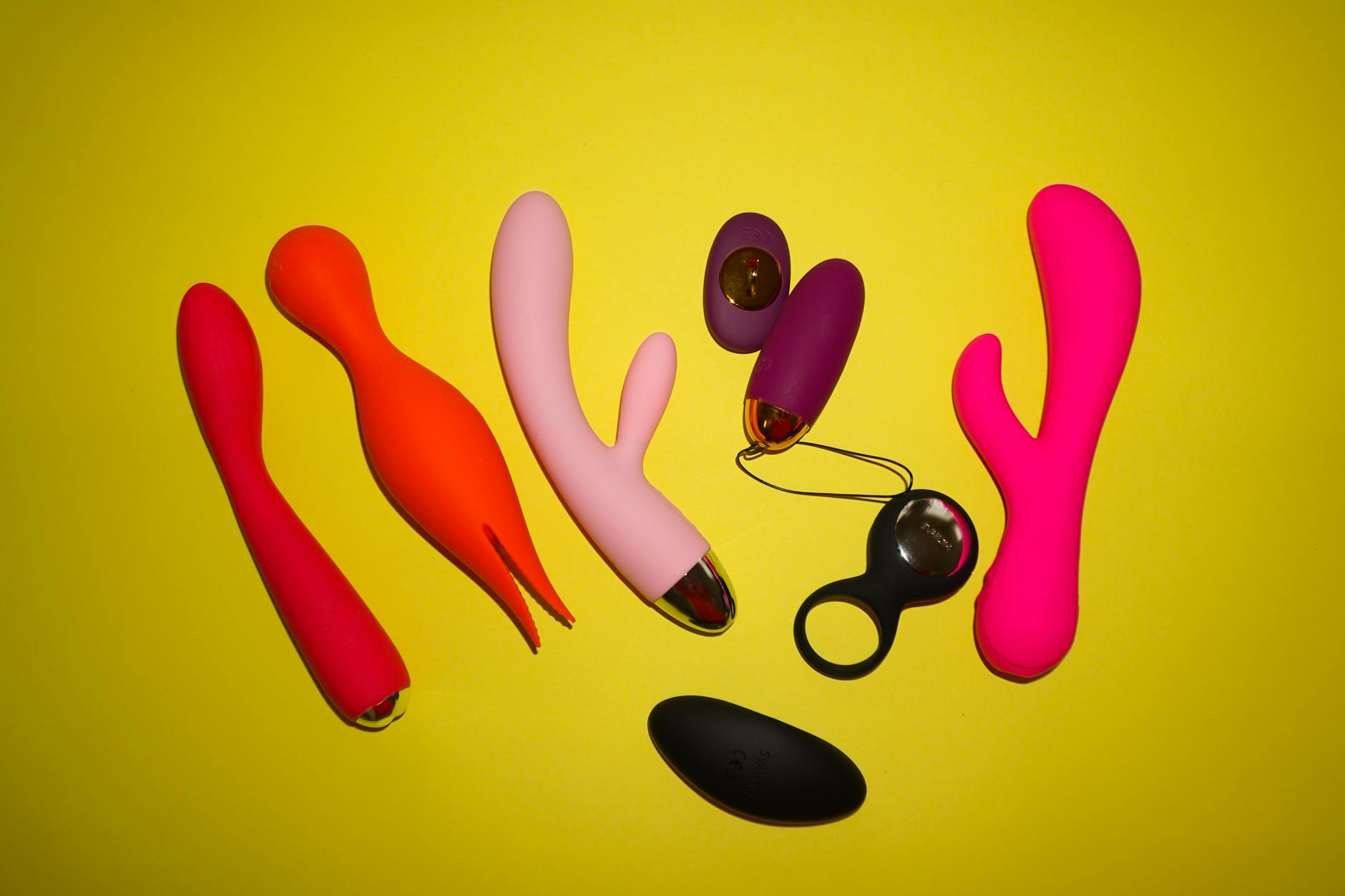
Photo by FounderTips on Pexels
When to add a second device or approach
Once you're comfortable reaching orgasm with your lemon vibrator solo, adding a partner or a second device can deepen the experience. But "comfortable" is the key. You need at least 3-4 weeks of consistent solo use where you're regularly reaching climax without panic.
When you're ready, experiment with a partner touching you in different ways while you use your lemon vibrator on the clitoris. This builds confidence that you can handle multiple inputs. You're teaching your nervous system that complexity doesn't mean danger.
Some people find that alternating between the lemon vibrator and direct touch helps too. Suction for 2-3 minutes, then manual stimulation, then back to suction. This rhythm variation can actually make the climb feel less anxiety-provoking because you're keeping your brain engaged.
The relationship between sensation and safety
Here's what I've learned over decades of coaching couples and individuals: better orgasms almost never come from better technique. They come from better safety.
When your nervous system trusts that nothing bad will happen if you let go, your body does things on its own. You breathe deeper. Your pelvis moves. Sensation intensifies not because you're trying harder but because you're resisting less.
Lemon vibrators and lemon sexual toys offer that trust through consistency. Suction is rhythmic. It's predictable. It doesn't suddenly change or surprise you. Your brain learns that it's safe to surrender.
If you've spent years white-knuckling your way through sex or orgasm, this might feel almost boring at first. Let that be okay. Boredom is your nervous system relaxing. Let it. Better orgasms are usually quiet orgasms, built in safety, not noise or drama.
FAQ: Orgasm Anxiety and Lemon Vibrators
Why does using a lemon clitoral vibrator feel safer than a traditional vibrator?
Traditional vibrators use rapid vibration, which can feel intense and unpredictable to a nervous system primed for anxiety. Lemon suction vibrators create a slow, rhythmic sensation that your body can anticipate. This predictability calms your anxiety response and allows your parasympathetic nervous system to stay engaged rather than switching into "brake" mode.
Can I use a lemon vibrator even if I've never had an orgasm with a partner?
Absolutely. In fact, it's often easier to reach orgasm solo with a lemon vibrator than with a partner, because there's no performance pressure. Once you build confidence climaxing solo, introducing a partner becomes less anxiety-inducing. Many people find it helpful to practice reaching orgasm on your own first, then gradually include a partner.
What if the plateau phase still happens and I panic?
Pausing and breathing is your reset. Stop moving the vibrator, keep it lightly in contact with your clitoris, and focus only on breathing slowly and deeply for 30-60 seconds. This calms your nervous system. Then resume. You don't have to push through panic. You can pause, reset, and try again. There's no time limit on pleasure.
Is it normal to feel numb or disconnected even with a lemon vibrator?
Yes, especially early on. Numbness is often part of the anxiety pattern. Your body literally dampens sensation when you're anxious, as a protection mechanism. This shifts as you build safety and trust with the device. Consistent use over 4-6 weeks usually changes this significantly.
Can anxiety about buildup come from past sexual experiences?
Often, yes. If you've had experiences where you were pressured to orgasm, rushed, or made to feel bad for wanting pleasure, your nervous system learned to shut down as protection. Healing this usually involves solo exploration first, so you can reclaim pleasure on your terms. A lemon vibrator's consistent, judgment-free suction is perfect for this kind of rewiring.
How long does it usually take to feel less anxiety about the buildup?
Most people notice a shift within 2-3 weeks of consistent solo use. Real confidence usually comes after 6-8 weeks. This varies widely. The key is removing pressure and judgment from the timeline. You're retraining a nervous system, not fixing a broken part. That takes time, but it works.
You deserve better than white-knuckled orgasms
Orgasm anxiety is real, it's common, and it's fixable. The most important thing I can tell you is this: it's not your fault, and it's not a personal failure. Your nervous system learned to protect you from something, and it's still running that old program.
Lemon vibrators, specifically clitoral suction devices, give your nervous system a new experience to learn from. Steady, predictable, safe pleasure. Once your body knows that letting go doesn't lead to disaster, everything changes.
Start with solo play. Use the lowest setting. Focus on breathing. Give yourself time. The buildup you've been fearing? It's actually just your body doing exactly what it's supposed to do. Your job is to learn to trust it.
If you want support talking through any of this, we're always here to chat at our contact page. You don't have to figure this out alone.