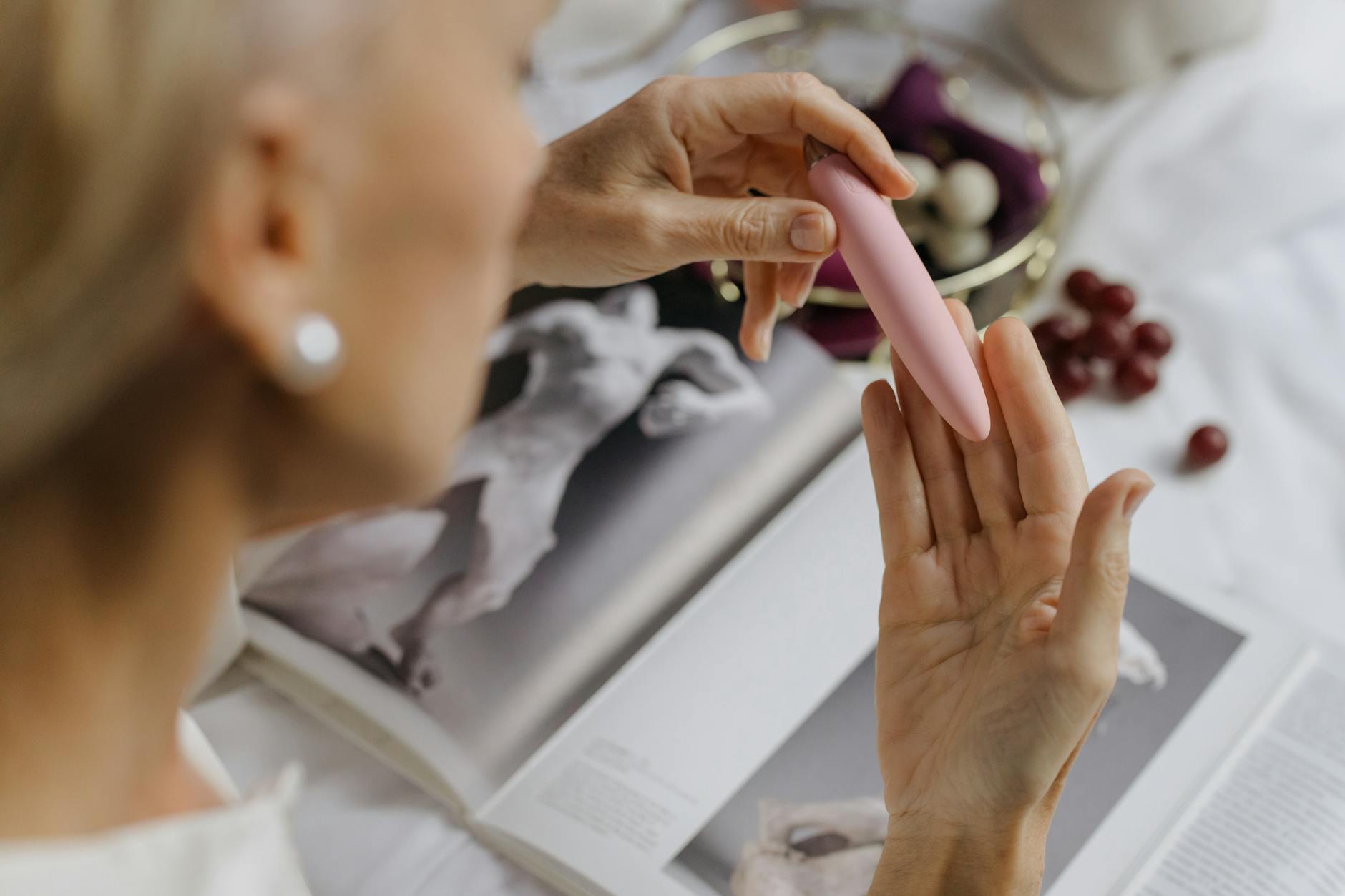
How to Use Lemon Vibrators When Pleasure Feels Difficult After Trauma
Let's be real. Trauma doesn't just change your mind about sex. It changes your nervous system's response to touch, sensation, and vulnerability. Your body develops a protective alarm system that goes off at moments you didn't choose, in ways that feel out of your control. And then someone (or the internet) suggests you should just "relax and enjoy yourself," which is about as useful as telling someone with insomnia to stop thinking about sleep.
Pleasure after trauma isn't something you find lying around. It's something you rebuild, slowly, with the right information and the right tools.
What trauma actually does to sensation
When your nervous system experiences overwhelming threat, it learns to flag touch as potentially dangerous. This isn't weakness. This is a perfectly logical survival response. Your body literally rewires itself to protect you. Pleasure pathways go quiet. Arousal feels distant or impossible. Sometimes touch that used to feel good now triggers a flinch, freezing, or sense of being outside your own body.
The tricky part is that this protection lingers long after the threat has passed. Your conscious mind might know you're safe. Your body doesn't believe it yet.
Recovery isn't about forcing pleasure back. It's about teaching your nervous system, slowly and deliberately, that touch can be safe again. That you can choose when and how sensation happens. That pleasure is something you give yourself on purpose, not something that happens to you.
Why control is the foundation
One of the first things I tell clients in recovery is this: you need to be the one holding the power. Not a partner. Not a toy that takes on its own rhythm. You.
This is where lemon vibrators, particularly the Lem with its varied intensity settings, become different than other tools. You're not receiving pleasure. You're creating it. You decide the speed, the pressure, the duration, the moment you stop. Your hands are on the controls.
That agency matters more than you might think. After trauma, the ability to say "I'm setting the pace here" rewires part of the nervous system that was violated. It says to your body: you're in charge now.
Starting with sensation outside pleasure
Honestly, most people skip this step, and it's usually where things stall. Before you're trying to feel pleasure, you're learning to feel sensation safely.
This means: turn off the vibrator. Hold a lemon vibrator in your hand and just feel the weight of it. The texture. The temperature. Let your nervous system get familiar with the object without any expectation of arousal. Do this for five to ten minutes. Do it multiple times. Let your brain catalog: this object stays the same. It doesn't change shape. It responds to what I want it to do.
Then, run it over non-sensitive areas first. Your inner arm. Your collarbone. Your hip bone. Feel vibration on places that aren't charged with trauma memory. Let your body remember what gentle sensation feels like without the stakes of sexual arousal.
Only then do you move toward the clitoris. And even then, with the vibrator off, just resting against the area. Many people in trauma recovery find that sensation builds faster when there's no pressure for anything to happen.
Working with numbness and disconnection
Some people don't feel fear after trauma. They feel nothing. The area that should light up with sensation just feels muted, distant, like it belongs to someone else.
Clitoral vibrators like the Lem address this differently than traditional vibration. The suction or air-pulse technology stimulates a broader nerve cluster, which means you're not relying on a single point of sensitivity. You're engaging the nervous system more fully.
Start at the lowest setting. Don't expect fireworks. You're looking for any shift. A warmth. A slight tightening. A sense of being present in that part of your body for just a few seconds. Pleasure comes later. Presence comes first.
If you're still not feeling it after a few sessions, that's data, not failure. Your nervous system may need more time, or it may need additional support. A trauma-informed therapist or somatic practitioner can help with grounding work that makes sensation possible.
Managing intrusive thoughts and flashbacks
You might be using a lemon vibrator correctly, doing everything right, and suddenly feel unsafe. A sensation triggers a memory. Your breathing changes. You're no longer in the present moment.
This is not a sign you're broken or that you should stop trying. This is a sign your nervous system is still processing something. Here's what to do in the moment:
Stop the vibrator. Ground yourself using the 5-4-3-2-1 technique: name five things you can see, four things you can touch, three things you can hear, two things you can smell, one thing you can taste. This isn't spiritual or vague. It's neurology. You're telling your brain: you're here, now, and the environment is safe.
Then pause. You don't have to continue immediately. You can set the vibrator down and just sit. Sometimes the best outcome from a session isn't an orgasm. It's noticing that you can stop whenever you want and nothing bad happens. That control is real.
Rhythm and pacing matter more than speed
One thing that surprises people is that the fastest setting isn't the goal. Actually, it rarely is for anyone, but it's especially true after trauma.
Your nervous system needs time to recognize a pattern. Consistency. Predictability. A slower rhythm on a lemon vibrator, sustained for several minutes, often builds more sensation than jumping between speeds or increasing intensity aggressively.
Think of it like teaching your body a language it forgot. You wouldn't start with complex sentences. You start simple. Slow. Repetitive. Until the meaning clicks.
When to bring a partner into this
This is important: you don't have to. Solo exploration is completely valid and often the first healthy step. But if you have a partner and want to involve them, here's the framework.
First, they need to understand that their job is not to create pleasure for you. Their job is to be present and predictable. Let them watch you use the vibrator solo a few times. Not in a performance way. Just them understanding what you're doing and why. You're building trust by showing them: this is how I'm learning to feel safe in my body.
Then, if you're ready, they can be in the room while you use it, but not touching you or directing anything. Just there. Steady. If that feels good after a few sessions, they can eventually hold the vibrator while you guide their hand. Emphasis on you guiding.
The key is layers. You don't jump from solo to partnered. You build trust one small step at a time.
What to expect over weeks and months
Sensation often doesn't return in a linear way. You might have a session where everything clicks and you feel fully present and aroused. Then the next session feels flat. This isn't backsliding. Nervous systems healing from trauma don't progress in straight lines.
What you're looking for is the overall trend. More sessions where you can stay present. Longer stretches without intrusive thoughts. A growing sense that your body is becoming your own again.
For some people, this takes weeks. For others, months. There's no timeline you should be on except your own.
When professional support becomes necessary
If you're consistently unable to feel sensation, or if flashbacks are severe and frequent, a trauma-informed therapist or sex therapist can provide somatic work that accelerates healing. Techniques like sensorimotor psychotherapy or somatic experiencing are specifically designed to rewire the nervous system's response to threat.
You don't need to do this alone. Actually, some nervous systems heal better with professional guidance.
The lemon vibrators like the Lem exist because pleasure is supposed to feel good. After trauma, that feels impossible. But your body's capacity for sensation doesn't disappear. It goes dormant. And dormant things can wake up. Slowly. On your terms. With the right approach.
People Also Ask
Can I use a clitoral vibrator if I have trauma-related vaginismus?
Yes, but with care. Vaginismus is involuntary muscle tension, often rooted in trauma memory. Start with external stimulation only, nowhere near internal sensation. Let your body get used to the vibrator's presence before any penetration is even a possibility. Many people find that external clitoral stimulation with a lemon vibrator actually reduces vaginismus over time because it teaches the nervous system that touch can be safe and pleasurable.
Is it normal to feel nothing the first time using a vibrator after trauma?
Completely normal. Your nervous system is still in protection mode. Numbness after trauma isn't broken sensation. It's active protective numbing. The job of the first few sessions isn't feeling pleasure. It's building familiarity and safety. Sensation comes later. Be patient with your body.
Should I tell my partner I'm using a vibrator for trauma recovery?
If you're in an emotionally safe relationship, yes. Not because you're obligated to, but because transparency builds trust. You might say something like: "I'm working on reconnecting with sensation as part of my healing. I want you to know what I'm doing and why." But if your relationship is unstable or controlling, prioritize your healing first.
What if a vibrator triggers flashbacks instead of helping?
Stop using it that way immediately and try a different approach. Work with a somatic therapist first to understand what's being triggered. Sometimes a different tool helps. Sometimes you need professional support to process the trauma itself before pleasure work is possible. Neither outcome is failure.
Can I use a lemon vibrator if I'm on antidepressants that reduce sensation?
Yes. In fact, the broader nerve stimulation of clitoral vibrators can help offset some medication-related numbness. That said, if sensation is completely absent, talk to your prescriber. Sometimes dosage adjustment or timing changes help. You can do both: adjust the medication AND use the right tools for sensation.
How long does it usually take to feel pleasure again after trauma?
There's no standard timeline. Some people experience shifts within weeks. Others need months or years of consistent, gentle practice. Trauma doesn't rush. Neither should recovery. What matters is consistency, not speed.
Your pleasure is worth rebuilding
Trauma tells your body that sensation is dangerous. That touch leads to harm. That pleasure is something that happens to you, not for you. None of that is true. Your nervous system learned those lessons as survival. It can learn different ones.
Using tools like lemon vibrators in trauma recovery isn't about performance or intensity. It's about agency. About reclaiming your body as yours. About slowly teaching your nervous system that pleasure, chosen by you, on your terms, is not just possible. It's something you deserve.
If you want to talk through your specific situation, we're here. Reach out at /contact.