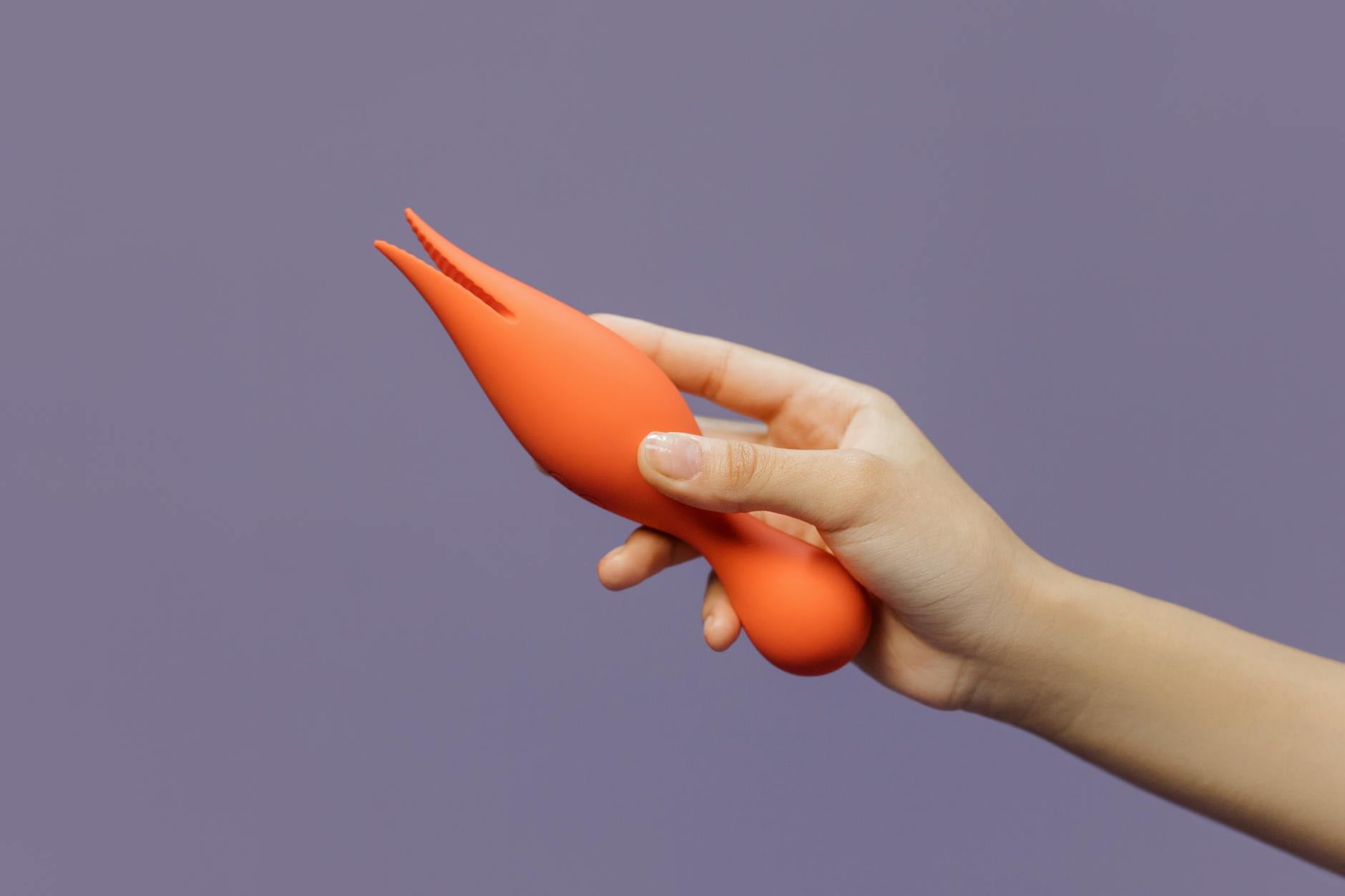
How to Use Lemon Vibrators When Arousal Takes Longer to Build
Let's be real: arousal doesn't work on a timer anymore. What used to happen in five minutes now takes twenty. Or thirty. And if you've been waiting for your body to snap back to the old pace, I'm here to tell you it probably won't. That's not failure. That's just how bodies actually work past a certain point.
The good news? Slower arousal is a feature, not a bug. And lemon vibrators are specifically engineered to work with extended foreplay, not against it. Here's how to use that timing shift to your advantage.
Why arousal actually slows down
There are three main culprits, and most of the time it's a combination of all three.
Hormonal changes. Whether it's menopause, fluctuating hormones from birth control, or just the natural drift that happens in your 40s and 50s, your body's not producing the same level of testosterone and estrogen it used to. These hormones prime the pump. When they shift, the pump takes longer to prime.
Neurological pacing. Your brain hasn't changed its baseline arousal threshold. That threshold has just... recalibrated. This is actually normal neurology, not a sign of anything wrong. Your nervous system is doing exactly what it should.
Context overload. By the time you have time for sex, your head is already juggling a dozen other things. Kids, work, finances, a house that needs cleaning. The mental load doesn't evaporate just because you're about to have sex. It has to be actively cleared first, which takes time.
None of these is fixable with sheer willpower. But all of them respond beautifully to a different kind of foreplay strategy.
The extended foreplay mindset shift
Here's the distinction that actually matters: arousal slowdown isn't about being broken. It's about needing a different framework for how sex works.
Old model: fast warm-up, quick to climax, done.
New model: longer warm-up, deeper engagement, more varied sensation, better orgasm.
When you stop fighting the timeline and actually lean into it, sex gets better. Not worse. Many of my clients report that their best orgasms happen when they've spent 30-45 minutes in foreplay, using tools like the Lem or other lemon clitoral vibrators partway through rather than at the end.
The Lem specifically works here because air-suction technology doesn't fatigue the way traditional vibration does. You can use it for five minutes or thirty minutes without numbness or desensitization. That flexibility is crucial when you're stretching out foreplay.
How to structure extended foreplay with lemon vibrators
Phase 1: Non-genital touch (10-15 minutes). This is kissing, neck touch, breast stimulation, whatever feels intimate and connective. No agenda. The goal is to get your nervous system out of "stressed" and into "present." Most of the people I work with skip this entirely. Don't. This is where slow arousal gets its foundation.
Phase 2: Manual stimulation (5-10 minutes). Hands only. This is the bridge between general intimacy and direct clitoral attention. It's also where you can notice what actually feels good today, because arousal patterns shift and what worked last week might feel different now. Pay attention.
Phase 3: Introduce the Lem (10-20 minutes). Start on setting 1 or 2. The whole point here is not to chase an orgasm. It's to let sensation build gradually and to notice the difference between what traditional vibration feels like and what suction feels like. Many people find the pattern creates a rolling wave of sensation rather than a hard peak. That wave can last.
Phase 4: Shift or stay (variable). This is where you can move into partnered penetration if that's what you want, or stay with the Lem, or switch to something else entirely. The only rule is that you don't move on because you should. You move on because sensation is asking for something different.
Why the Lem works specifically for slower arousal
Traditional vibrators buzz. They create constant high-frequency stimulation, which can feel amazing in the moment but often leads to a plateau where sensation doesn't deepen. You either chase more intensity or you lose the thread.
Lemon clitoral vibrators use air-suction, which is a completely different mechanism. It creates rhythmic pressure rather than constant buzz. This matters because pressure is what the clitoral nerve network responds to most reliably, especially when arousal is building slowly. The rhythm gives your nervous system something to sync with.
Here's another practical detail: suction doesn't require the same level of direct friction that traditional vibration does. That's huge when you're doing extended foreplay. Direct clitoral friction for thirty minutes can create soreness. Suction you can maintain much longer without discomfort.
I've had clients tell me that switching from a traditional vibrator to a lem vibrator genuinely changed their arousal timeline. Not because the Lem is "better," but because it works with slow-build arousal instead of against it.
Building communication around longer foreplay
If you're with a partner, this timing shift sometimes creates friction. They're used to a 15-minute encounter. You need 40. That's a conversation that needs to happen with honesty and zero shame.
"I'm not broken. Arousal is just different now, and it's actually better this way. I need more time at the beginning, and I want to try something new midway through" is a completely reasonable thing to say.
Partners often worry that longer foreplay means they're not "doing enough." The opposite is usually true. Longer foreplay means more time to pay attention, more chances to notice what's actually working, more opportunities for connection. If you frame it that way instead of as "something is wrong," the reception is usually different.
Also: extended foreplay is solo foreplay's superpower. If you're exploring on your own, this is actually a gift. You get to spend as much time as you want in the buildup. No rush. No pressure. The only agenda is your pleasure.
Practical adjustments that make extended foreplay work
Battery life. Make sure your Lem is fully charged. Twenty minutes of use eats battery faster than you think.
Lube. Water-based lube stays slick through extended foreplay. Reapply every 10-15 minutes. Friction on dry tissue will pull you out of arousal faster than anything else.
Mental anchoring. Instead of thinking "I hope this works quickly," think "I have 40 minutes to enjoy this." The mindset shift alone changes how your body responds.
Pacing patterns. Don't stay on one Lem setting for the whole session. Move between patterns. Rest for 30 seconds, then start again. Variation keeps sensation interesting and prevents plateaus.
Position comfort. You'll be in foreplay longer, so position matters. If you're on your back, a pillow under your hips changes everything. Comfort isn't a luxury when you're stretching time out.
When slow arousal signals something else
Slower arousal is normal and manageable. But if you're experiencing zero arousal, complete emotional numbness, or pain, that's different and worth mentioning to a doctor or a therapist.
Depression, anxiety, some medications, and relationship disconnection can all show up as "arousal is taking forever." Sometimes you can address it with foreplay adjustments and lemon clitoral vibrators. Sometimes you need to address the underlying thing first. Both are valid.
The signal is: if extended foreplay plus the Lem plus a partner's genuine engagement still produces nothing, talk to someone. That's not a personal failure. That's useful information.
Reframing slower arousal as an advantage
Here's what I want you to hear: slow arousal is not the enemy. Fast arousal never meant better sex. It just meant faster.
Some of the most reliable, deepest orgasms I've witnessed in my practice have come from people who spent 30-45 minutes in foreplay. They weren't trying to "get somewhere." They were present in the whole experience. And the Lem, with its suction mechanism and adjustable patterns, is built for exactly that kind of extended, building engagement.
Your body's not broken. It's just asking for a different rhythm. And honestly? That's an upgrade.
People also ask
How long should foreplay actually take if arousal is slow?
There's no "should," but 20-40 minutes is pretty standard for people experiencing slower arousal. The point isn't to hit a specific timer. The point is to give your nervous system enough time to shift out of "running errands" mode and into "present" mode. Some days that's 15 minutes. Some days it's an hour. Listen to your body.
Can lemon clitoral vibrators speed up arousal or is it just a tool for extended foreplay?
The Lem (and other lemon clitoral vibrators) doesn't speed up arousal because speed isn't actually the goal. But it does make extended arousal feel active and engaged rather than stuck. Many people find that having the vibrator in the mix during foreplay, rather than only at the end, changes the whole experience. It's not about rushing. It's about adding sensation and rhythm to the buildup.
What if my partner doesn't want to do 40-minute foreplay sessions?
That's worth a direct conversation. Sometimes partners worry that longer foreplay means the sex is "taking too long." Reframe it: longer foreplay plus a slower build actually often means better orgasm and better satisfaction overall, not more total time in bed. If you're clear about what you need and why, most partners are willing to adjust. If they're not, that might signal something else worth addressing.
Does slower arousal mean I'll have worse orgasms?
Actually the opposite. Slow arousal, when you work with it instead of against it, tends to produce deeper, more full-body orgasms. The buildup creates more tension in the nervous system, which means the release is more significant. That's not always true for everyone, but it's common enough that it's worth trying before assuming slow arousal is a problem.
Is it normal for arousal to slow down after 40?
Completely normal. Hormonal changes, neurological shifts, life context, stress. It's not universal (some people maintain fast arousal their whole lives), but it's common enough that you're definitely not alone. And it's not permanent or irreversible. Different tools, different approaches, and sometimes different lifestyle factors can shift it back.
Should I see a doctor if arousal is suddenly very slow?
If it's a recent change and nothing else has shifted (stress, relationship, medications), it's worth mentioning to your GP. Sometimes slow arousal is hormonal and sometimes it's something else entirely. A conversation with a clinician can help clarify. But "slow" is not inherently "broken." It depends on whether it's new or whether your body's just asking for a different approach.
Slow arousal isn't a problem you need to fix. It's an invitation to do foreplay differently. The Lem, designed specifically as a lemon clitoral vibrator with air-suction technology, works beautifully with extended warm-up. Give yourself permission to take the time. Your nervous system, and your orgasm, will thank you. If you're exploring what tools and rhythms work for you, start with how to use lemon vibrators for solo pleasure to understand your own patterns first. Or if you're in a relationship, how to use lemon vibrators during midlife relationship reconnection might help frame the conversation with a partner. Questions? Get in touch.