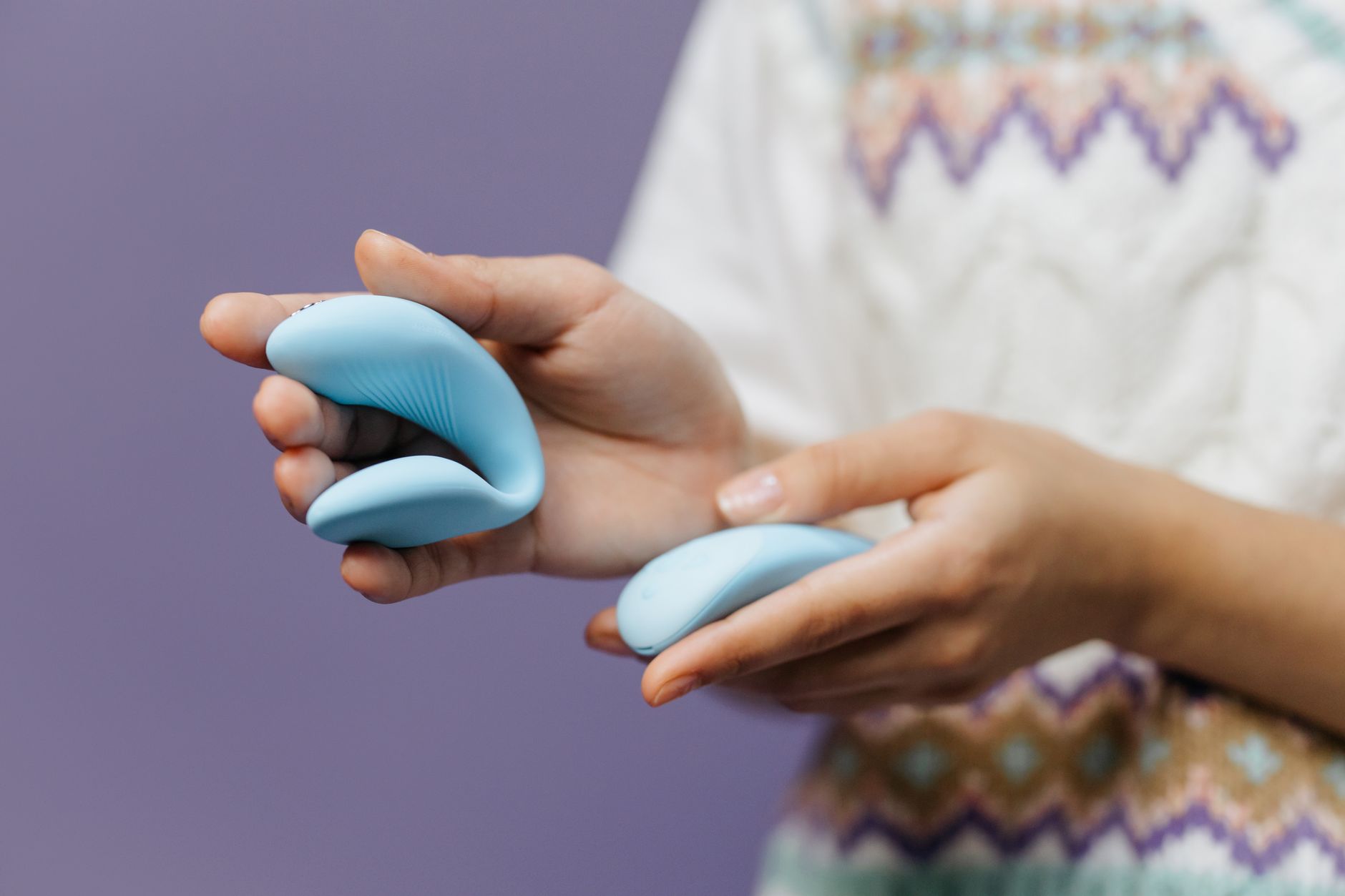
Let's talk about the elephant in the gym
You exercise. Your body changes. And nobody tells you that your pleasure changes too. Regular intense training rewires blood flow, increases muscle efficiency, and alters how your nervous system registers sensation. Most of what you read about pleasure assumes a sedentary baseline. That's not your baseline anymore.
If you've noticed that lemon clitoral vibrators or other toys feel wildly different depending on your training phase, you're not imagining it. Your athletic body is genuinely responding differently. Understanding why matters more than trying to force the same routine that worked before training season.
How exercise physically rewires arousal response
Here's the chain reaction: intense training strengthens your pelvic floor (in good ways and sometimes not-so-good ways). It also increases overall cardiovascular efficiency. Better circulation means faster blood delivery to the clitoris during arousal. Sounds great, right?
It is great. But it also means you might need less time to reach peak sensitivity, and your tolerance for intensity can shift dramatically. People who do endurance training often report that their clitoral tissue responds faster to stimulation. Cyclists and runners especially notice this because the sport puts direct pressure on the pelvic region.
The second thing that changes is recovery. After a hard workout, your body is flooded with adrenaline, cortisol, and endorphins. These are not the hormones that prime you for pleasure. Trying to use a lemon vibrator immediately post-workout is like trying to have a conversation in a nightclub. Technically possible, but you're fighting the environment.
Your nervous system is also in sympathetic overdrive (fight or flight) after training. Pleasure lives in the parasympathetic system (rest and digest). That's not a myth. That's neurobiology.
When lemon vibrators feel best for athletic bodies
Timing is everything. Here's the practical breakdown.
Four to six hours after training. Your heart rate has dropped, cortisol has peaked and begun declining, and your muscles have started the recovery process. This is the window when sensation sensitivity normalizes. If you're reaching for a lem vibrator in this window, you're working with your body's natural rhythm instead of against it.
On active recovery days. Easy movement, yoga, or rest days mean lower adrenaline and a nervous system that's already closer to baseline. Many people report that pleasure is more intense on these days, not because tissue sensitivity increased, but because your brain is actually present.
Early morning before training. Counterintuitively, some athletes find that morning pleasure (before the day's workout) is sharper than evening. Your body hasn't burned through cortisol, and you've had 8 hours of rest. The lemon clitoral vibrator does more work here because you're not fighting chemical resistance.
The pelvic floor paradox in trained athletes
This is the part nobody talks about. Your pelvic floor gets stronger with training. Stronger is generally good. But tension is not the same as strength, and many high-level athletes develop pelvic floor hypertonia. That means the muscles are gripped, not relaxed.
When your pelvic floor is over-tense, orgasm can feel muted, delayed, or require way more intensity to trigger. You might think you need a more powerful lemon vibrator. You don't. You need the pelvic floor to actually relax.
This is why lem vibrators that offer patterned stimulation (rather than pure intensity) often feel better for athletes. Patterns interrupt the grip. They also give your nervous system something to track, which pulls attention away from the unconscious tension you're holding in that area.
One practical fix: spend 2-3 minutes consciously relaxing your pelvic floor before you reach for any toy. Breath work helps. Slow inhale through the nose for 4 counts, exhale for 6 counts. Let the pelvic floor drop with the exhale. Do that 8-10 times. Then try stimulation. The difference is real.
How training cycles affect sensitivity and desire
If you're tracking your menstrual cycle, you already know that hormones change week to week. Training cycles add another layer. During heavy training blocks (think: race prep), your body is in a catabolic state (breaking down). Testosterone and estrogen both drop slightly. Desire often drops with them.
During taper weeks (the light weeks before competition or testing), your body shifts into anabolic recovery. Hormones stabilize, fatigue clears, and many athletes suddenly feel a surge in libido. That's your body saying it's ready to do other things now.
Nancy Lemons lemon sexual toys work best when you're attuned to this cycle. If you're in heavy training and noticing that nothing feels good, that's not a toy problem. That's a nervous system and hormonal phase problem. Pushing harder with stimulation just adds friction (literally and figuratively).
The flip side: in your taper or off-season, you might discover that a lem vibrator you thought was underpowered suddenly feels absolutely perfect. Your body's sensitivity has normalized. This isn't the toy changing. It's you.
Blood flow, sensitivity, and the warm-up window
Athletes understand warm-ups. Your muscles need blood flow and neural activation before maximum effort. Your clitoris needs the same thing, but many people skip it.
For trained athletes especially, a 5-minute warm-up matters. Not touch yet. Circulation. Walk around, do light movement, let your heart rate climb gently. Then add mental focus (thinking about what you want, not what you should be doing). Then touch. Then toys.
Why? Intense training has taught your body to respond to effort gradually. Your nervous system doesn't snap from zero to 100. Adding a warm-up phase mirrors the athletic pacing you already understand. A lemon clitoral vibrator deployed into well-oxygenated tissue with an activated nervous system produces a completely different experience than dropping it in cold.
Some athletes find that a 10-minute solo touch phase before using any lemon vibrator makes all the difference. You're priming the system. You're also checking in with what you actually want right now, which is harder to know when your body is running on training fumes.
Medication, training, and pleasure interaction
Many endurance athletes take anti-inflammatories, especially during heavy training blocks. NSAIDs can reduce overall sensation sensitivity. If you're taking these regularly and noticing that even the best lemon sexual toys feel muted, that's worth discussing with a sports medicine provider. The fix isn't necessarily to stop the medication, but to understand the interaction.
Similarly, some athletes use beta-blockers for performance (which is a whole ethics conversation). These significantly reduce arousal response because they literally lower your heart rate and blood pressure, which are core parts of sexual response. If you're on any medication for training or recovery, it's worth asking a healthcare provider how it might affect sensation.
Recovery-focused pleasure strategies
Here's what I recommend to athlete clients who want pleasure to feel good again.
First: prioritize sleep. You can't pleasure your way out of sleep debt. That's not spiritual. That's just biology. Tissue sensitivity, emotional availability, and arousal speed all tank when you're running on 5 hours of sleep. One good night often resets everything.
Second: separate from training pressure. If you're using pleasure as a reward for hitting workout targets or a stress release for a missed session, you're adding performance pressure to the one place that should be pressure-free. That tightens everything. Use it because you want it, not because you earned it.
Third: experiment with longer time horizons. Athletes are used to efficiency. 30-minute workout, done. With pleasure, especially post-training, longer can be better. Give yourself 45 minutes with no goal. Touch, use a lem vibrator if you want, but the point is sensation exploration, not orgasm achievement. You might be shocked at how different this feels.
Fourth: track what actually works. Keep a note. Did the lem vibrator feel good on a heavy training day or a light day? Morning or evening? Alone or with a partner? You'll see patterns. Your athlete brain already understands data. Use it here.
Frequently Asked Questions
How long after a hard workout should I wait to use a lemon vibrator?
At minimum, 3-4 hours. This gives your heart rate time to drop, your cortisol to peak and begin declining, and your nervous system to shift from sympathetic (fight or flight) toward parasympathetic (rest and digest). Pleasure lives in parasympathetic activation. If you're panting and your body is still in workout mode, a lemon clitoral vibrator won't feel as good because your brain isn't available. If you absolutely can't wait, a warm shower and 10 minutes of deep breathing helps transition your nervous system.
Can intense training make you lose the ability to orgasm?
Not permanently, but yes, temporarily. Heavy training blocks suppress sexual desire and can make orgasm feel distant. This is normal physiology. Your body is allocating resources to recovery from training, not to sexual response. It returns when your training load decreases or when you deliberately create the conditions for pleasure (rest, warm-up, no time pressure). If this is happening and it's distressing, talk to a sports medicine provider or therapist who understands athlete bodies.
Do lemon sexual toys work differently for cyclists or runners than swimmers?
Yes, somewhat. Cyclists and runners create direct pressure on the pelvic floor, which can lead to more tension and sometimes faster arousal response (paradoxically). Swimmers use full-body effort without that pinpoint pressure. All athletes benefit from understanding their sport's specific impact. A cyclist might need more focus on pelvic floor release. A runner might find that patterned lemon vibrators feel better than pure intensity because patterns interrupt tension.
Is it normal for desire to disappear during peak training?
Completely normal. Your body isn't broken. It's just prioritizing recovery. Desire usually returns within days of easing training load. If it doesn't return after a full week of lighter training, that's worth mentioning to a provider. But during heavy blocks? Total loss of interest in pleasure is a standard athlete response to overtraining. It's information, not failure.
Should I use a different lemon vibrator depending on my training phase?
Not necessarily a different toy, but different approaches. During heavy training, lower intensity, longer warm-up, and recovery-focused timing. During taper or off-season, you might want more intensity because your baseline sensitivity is higher. The lem vibrator stays the same. How you use it changes.
Can pelvic floor exercises help pleasure feel better if I'm an athlete?
Yes, but only relaxation-focused ones, not clenching ones. Many athletes already have strong pelvic floors. What they often need is release. Breathing, gentle stretching, and conscious relaxation during sex or toy use can transform the experience. Clenching exercises (Kegels) are less helpful for already-trained bodies unless there's specific weakness. Work with a pelvic floor physical therapist if this is a real issue.
The bottom line
Your athletic body deserves pleasure that matches where you actually are, not where you think you should be. Lemon clitoral vibrators work beautifully for trained bodies, but timing, pacing, and nervous system state matter more than the tool itself. Pay attention to what feels good when. That data is worth more than any generic advice. Your pleasure isn't a weakness in your training. It's part of recovery.
If you want to talk through what's working and what's not, I'm here. Reach out anytime.