Let's talk about the elephant in the room
When a relationship shifts, pleasure often disappears from the conversation first. You're managing kids, work stress, grief, resentment, or just the weird flatness that settles in after years together. Sex becomes transactional or vanishes entirely. And somewhere in there, you stop asking yourself what feels good.
Here's the thing: rebuilding pleasure during a relationship transition isn't an indulgence. It's communication. It's literally a pathway back to each other.
Why relationship transitions kill pleasure in the first place
Let me be clear about something. When couples come to me after a major transition—maybe one partner's health changed, maybe someone lost a job, maybe the kids finally left home—the pleasure complaint rarely sits alone. It's tangled up with a dozen other problems: unspoken resentment, exhaustion, identity confusion, or just the fact that you've both forgotten how to be playful together.
Neurologically, pleasure requires safety. It requires a functioning prefrontal cortex, not a nervous system stuck in fight-or-flight mode. When you're managing a transition, your brain is literally not in the right state for arousal. Add stress hormones, sleep deprivation, and emotional distance, and your body stops responding the way it used to.
But here's what I see clinically: couples who actively rebuild pleasure during transitions often emerge closer. Not because the sex is magical. Because the act of prioritizing touch, sensation, and play signals to both partners that intimacy still matters.
How lemon vibrators fit into reconnection
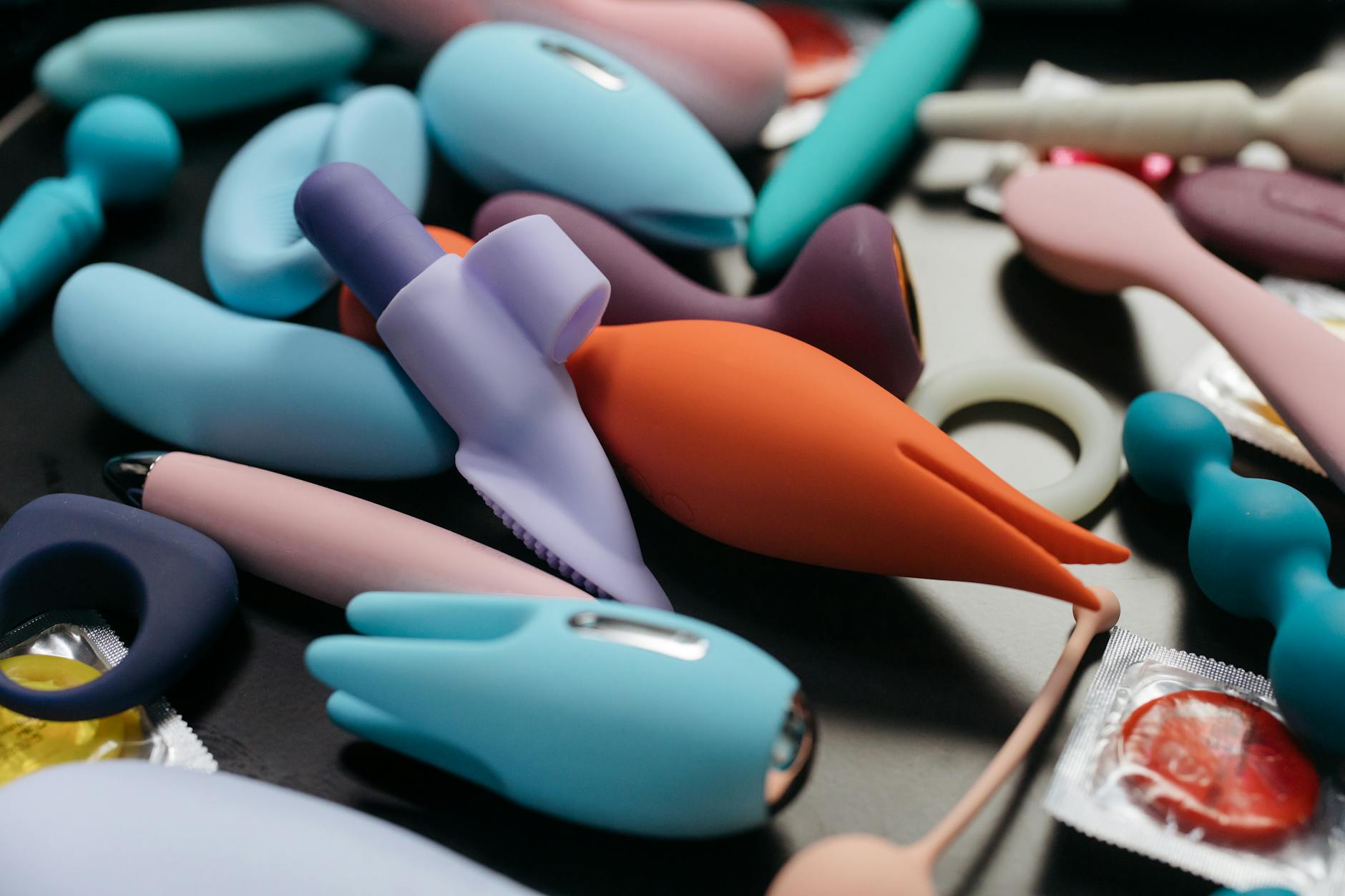
Now, before you think I'm suggesting you buy your way out of relationship problems, I'm not. A lemon clitoral vibrator like the Lem isn't a fix. It's a tool. And tools matter when you're rebuilding.
Here's why they're particularly useful during transitions:
First, they remove performance pressure. When pleasure has been absent for months or years, reintroduction often feels awkward or mandatory. A clitoral vibrator gives permission to just feel something without the pressure of coordinating with another person. For someone whose body has gone numb or whose arousal has flatlined, that permission matters.
Second, they're low-stakes. You can use a lemon vibrator alone, or introduce it with a partner at whatever pace feels right. There's no negotiation, no "are we doing this or not." It's just there, available.
Third, they work fast and reliably. During transitions, people often feel disconnected from their own bodies. A tool that works consistently—that produces clear, unambiguous sensation—can help rewire the neural pathway between stimulation and pleasure. Your nervous system starts to remember: oh, I can feel good.
The reconnection phases
I typically see couples move through three phases when they're rebuilding pleasure after a transition.
Phase one: Solo rediscovery. This is where someone—often the partner with the lower desire—uses a vibrator alone. No pressure, no partner watching, no performance. Just sensation. This phase alone can take weeks or months, and that's fine. The goal is to reconnect your body to pleasure independently.
Phase two: Parallel presence. Partner is in the room, maybe in the same bed, but not participating. You're not ignoring them. You're showing them that you're willing to prioritize sensation again. Psychologically, this is massive. It signals readiness.
Phase three: Integration. Introducing the vibrator together. This might look like one partner using it on the other, or using it together. The specific choreography matters less than the fact that you're in it together again.
Plenty of couples stay in phase one or two indefinitely, and that's completely fine. The point isn't to reach some "normal" couple-sex experience. The point is intentionality and consent at every stage.
The conversation you actually need to have
Here's where the relationship work really lives. You cannot introduce lemon vibrators (or anything) without first establishing some baseline safety and honesty.
Before you even think about a tool, you need to answer: What happened? Not "how did pleasure disappear" but "what changed in us?" Are you angry at each other? Did one partner's health shift? Did caregiving demands flatten you both? Did you stop seeing each other as desirable? Did you both just get depressed?
The reason this matters is because no vibrator will work if the underlying disconnect is unaddressed. If you're introducing clitoral vibrators because you're hoping they'll fix a marriage that's missing emotional intimacy, you're treating the symptom, not the disease.
But if you're introducing them because you've done some of the harder work—you've talked, you've reconnected emotionally, you're ready to rebuild the physical piece—then you're working with the tool correctly.
What actually matters more than the tool
I want to be direct about this. The vibrator is secondary. What matters is:
Time. You cannot rebuild pleasure in five-minute windows between obligations. You need 30 to 90 uninterrupted minutes where you're both present and not half-thinking about laundry.
Novelty. After years together, sameness feels numb. A lemon vibrator isn't novel because it's fancy. It's novel because it's different. You could also introduce a different location, a different time of day, or a conversation you've never had. Novelty matters more than the specific tool.
Curiosity over expectation. The moment you think "this should lead to orgasm" or "this should make me feel like I did at 28," you've lost the plot. The goal is sensation, not performance. Curiosity kills the pressure.
Permission to start over. This is maybe the most important one. Your bodies have changed. Your desires have probably changed. The sex you had before the transition might not be what you want now. And that's not a problem. It's an opportunity to ask: what do we actually want now?
When external support helps
I won't sugarcoat this: some couples can't rebuild intimacy alone. If resentment has calcified, if trust is genuinely broken, if one partner has checked out entirely, a vibrator and good intentions won't fix it. This is when you talk to a couples therapist, specifically one trained in sex therapy or intimacy work.
A therapist can help you untangle the actual problems and create safety for vulnerability. Then the tools—whether that's lemon clitoral vibrators or something else entirely—become genuinely useful.
The real invitation here
Relationship transitions are hard. Pleasure feels like a luxury when you're managing fundamental shifts. But couples who actively reconnect to touch and sensation during these periods often report that intimacy becomes one of the stabilizing forces, not another thing that broke.
If you're thinking about trying a lemon vibrator during a relationship transition, start by asking yourself: Am I ready to rebuild this? Is my partner? Do we have the emotional safety to try? If the answer to all three is yes, then a tool can help. If the answer is no to any of them, that's information too. Honor it.
Your pleasure matters. And you deserve the space and intention to rebuild it, whatever that looks like.